
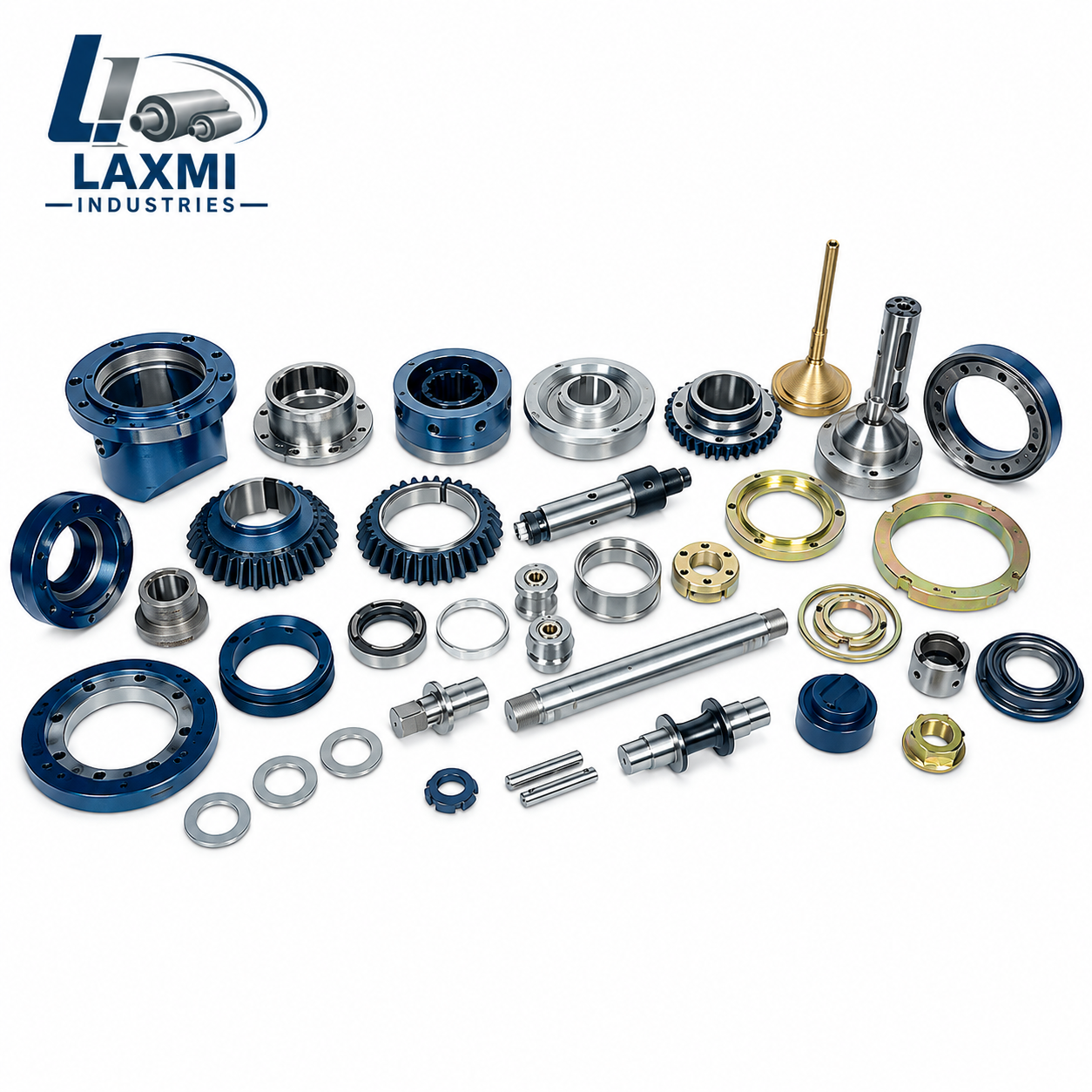
Rolling Mill Spare Parts: Complete Guide to Choosing the Right Components
Rolling Mill Spare Parts: Complete Guide to Choosing the Right Components
Reliable rolling mill spare parts are essential for maintaining stable production, equipment performance, and consistent product quality. Rolling mills operate under demanding mechanical conditions, and components such as rolls, gears, bearing housings, guides, shafts, and other wear parts can require inspection, maintenance, repair, or replacement during the operating life of the equipment.
Selecting the correct replacement component is important because even a small difference in dimensions, material, mounting arrangement, or machining accuracy can affect the performance of a rolling mill. For this reason, manufacturers and maintenance teams should evaluate spare parts based on the actual equipment specifications and operating requirements rather than selecting components only by appearance or price.
This guide explains the major types of rolling mill spare parts, what to consider when purchasing them, and how to provide the right information to a manufacturer when requesting a quotation.
What Are Rolling Mill Spare Parts?
Rolling mill spare parts are replacement components used to maintain, repair, or restore rolling mill machinery and associated production equipment. Depending on the type of rolling mill, these components can include mechanical, rotating, guiding, supporting, and wear-related parts.
Spare parts may be required as part of scheduled preventive maintenance, after normal component wear, following equipment damage, or during a plant modernization or upgrade.
Why Quality Rolling Mill Spare Parts Matter
Rolling mill components often operate under continuous mechanical loads, friction, vibration, and thermal conditions. Components manufactured with suitable materials and accurate dimensions can help maintain the intended operation of the equipment.
Properly specified spare parts can help manufacturers with:
- Reliable equipment operation
- Consistent production performance
- Accurate component alignment
- Reduced unexpected maintenance interruptions
- Longer component service life
- Better maintenance planning
- Improved equipment availability
Common Types of Rolling Mill Spare Parts
1. Rolling Mill Rolls
Rolling mill rolls are among the most important working components in a rolling mill. They directly interact with the material being processed and must be manufactured according to the required roll dimensions, pass profile, material, and operating conditions.
Laxmi Industries supplies China Rolling Mill Rolls and Copper Rolling Mill Rolls for applicable rolling mill requirements.
2. Rolling Mill Stand Components
Rolling mill stands contain several precision components that support the rolling operation. Depending on the equipment design, replacement requirements may include shafts, gears, bearing housings, guides, fasteners, and other mechanical components.
Our Rolling Mill Stand solutions are designed for applicable industrial rolling applications.
3. Bearing Housings
Bearing housings support bearings and help maintain the required position and alignment of rotating components. Accurate dimensions and proper machining are important when manufacturing replacement bearing housings.
For specialized applications, components such as CCR stand bearing housings may be manufactured according to existing drawings, samples, dimensions, or equipment specifications.
4. Stand Straight Bevel Gears
Bevel gears are used in specific rolling mill drive and transmission arrangements to transfer rotational motion between components. Wear, tooth damage, incorrect alignment, or other mechanical issues can require replacement.
When ordering a replacement bevel gear, buyers should provide gear dimensions, tooth information, shaft details, mounting specifications, and the original equipment information whenever available.
5. Rolling Mill Guides
Guides help control and direct material as it moves through different sections of a rolling mill. Guide components need to be properly positioned and matched to the material size and rolling configuration.
For copper wire rolling applications, an appropriately designed exit guide for wire rolling mills can support controlled material movement after the rolling stand.
6. Shafts and Drive Components
Shafts and associated drive components transmit mechanical power within the rolling mill. These components may require replacement because of wear, fatigue, dimensional damage, or other operating conditions.
Replacement shafts should be manufactured according to the required diameter, length, keyway, coupling arrangement, material, and other relevant specifications.
7. Roll Rings and Wear Components
Roll rings and other wear components are used in suitable high-speed and specialized rolling applications. Their material, hardness, dimensions, and surface characteristics should be selected according to the specific production requirements.
How to Choose the Right Rolling Mill Spare Parts
1. Identify the Exact Component
Before requesting a quotation, identify the exact component that needs replacement. Machine photographs alone may not always provide enough information for accurate manufacturing.
Whenever possible, provide the original part number, drawing number, machine model, stand number, or other equipment identification information.
2. Provide Accurate Dimensions
Dimensional accuracy is particularly important for mechanical components that need to fit into an existing rolling mill.
Useful information may include:
- Overall dimensions
- Diameter
- Length
- Bore dimensions
- Keyway dimensions
- Thread specifications
- Mounting-hole dimensions
- Gear dimensions
- Bearing dimensions
- Pass profile information
3. Share Existing Drawings
An original technical drawing is one of the most useful documents when ordering a replacement component. It allows the manufacturer to understand critical dimensions, tolerances, materials, surface requirements, and assembly details.
If an original drawing is not available, an existing component can provide useful information when accompanied by accurate measurements and photographs.
4. Consider Material Requirements
The material used for a spare part should be selected according to its application and operating conditions. Components exposed to high mechanical loads, friction, or wear may require specific alloy or wear-resistant materials.
The manufacturer should evaluate the application before confirming the material specification for a replacement component.
5. Check Machining Accuracy
Precision machining is important for components that must fit with existing equipment. Critical features such as bores, shafts, gear teeth, mounting surfaces, and alignment surfaces should be manufactured and inspected according to the required specifications.
6. Consider Service Conditions
When selecting spare parts, provide information about how the component is used. Production speed, material being rolled, operating temperature, cooling conditions, loading, and working environment can all be relevant to component selection.
When Should Rolling Mill Spare Parts Be Replaced?
Replacement intervals vary depending on the component, operating conditions, maintenance practices, and production requirements. Some parts are replaced according to planned maintenance schedules, while others are replaced after inspection identifies excessive wear or damage.
Potential warning signs include:
- Visible cracks or damage
- Excessive wear
- Unusual vibration
- Abnormal noise
- Loss of dimensional accuracy
- Reduced production stability
- Repeated component failures
- Increasing maintenance requirements
Inspection and maintenance schedules should be established according to the equipment manufacturer’s recommendations and the operating conditions of the specific plant.
Why Buying the Correct Spare Part Is Important
A replacement component should not be selected solely because it looks similar to the original part. Components can differ in material, dimensions, tolerances, mounting arrangement, hardness, and other engineering characteristics.
Using an incorrectly specified component can create installation problems or affect equipment operation. Providing complete technical information to the supplier helps reduce the possibility of specification errors.
OEM Replacement vs Custom-Manufactured Spare Parts
Depending on the equipment and application, manufacturers may obtain replacement parts directly from the original equipment manufacturer or from a specialized engineering company capable of manufacturing components according to the required specifications.
For custom-manufactured replacement parts, buyers should verify the supplier’s engineering capability, manufacturing processes, inspection procedures, material specifications, and ability to reproduce critical dimensions accurately.
What Information Should You Provide for a Spare Parts Quotation?
When requesting a quotation for rolling mill spare parts, providing detailed technical information can help the supplier understand the requirement more accurately.
- Component name
- Required quantity
- Machine manufacturer
- Machine model
- Stand number
- Original part number
- Technical drawing
- Component photographs
- Dimensions
- Material specification, if known
- Operating application
- Required delivery quantity and schedule
Rolling Mill Spare Parts for Copper Wire Rod Mills
Copper wire rod production equipment contains several components that require accurate manufacturing and regular maintenance. Depending on the production line, spare parts can include rolling mill rolls, guides, bearing housings, gears, shafts, and other mechanical components.
For copper rolling applications, component specifications should be selected according to the mill configuration, copper product dimensions, production speed, and operating conditions.
Rolling Mill Spare Parts for China Rolling Mills
Manufacturers operating China-manufactured rolling mills may require replacement components that match the dimensions and interfaces of their existing equipment.
Laxmi Industries supplies China Rolling Mill Rolls and can evaluate suitable replacement requirements based on drawings, photographs, measurements, and machine details supplied by the customer.
Why Choose Laxmi Industries?
Laxmi Industries provides precision-engineered rolling mill equipment and components for industrial metal processing applications. Our product portfolio includes rolling mill stands, rolling mill rolls, continuous casting machines, and various rolling mill spare parts.
Our spare-parts capabilities cover applications involving components such as rolls, guides, gears, bearing housings, shafts, and other mechanical parts. Replacement components can be evaluated according to the customer’s existing equipment specifications and application requirements.
Explore our Rolling Mill Stand Spare Parts range or contact Laxmi Industries with your component drawing, dimensions, photographs, or machine details to discuss your requirement.
Frequently Asked Questions
What are the most common rolling mill spare parts?
Common requirements can include rolling mill rolls, bearing housings, gears, shafts, guides, roll rings, couplings, and other equipment-specific components. The exact spare parts required depend on the rolling mill design and application.
Can rolling mill spare parts be manufactured according to a drawing?
Yes, a technical drawing can provide important information for manufacturing a replacement component. Critical dimensions, tolerances, material specifications, and other requirements should be reviewed before production.
Can I order a replacement part without the original drawing?
Depending on the component, an existing part, accurate measurements, photographs, machine details, or other technical information may help the manufacturer evaluate the requirement. The amount of information needed depends on the complexity of the component.
How can I request a quotation for rolling mill spare parts?
Provide the component name, quantity, machine information, drawings or dimensions, photographs, material information if available, and the intended application. More complete information can help the supplier evaluate the requirement more accurately.
Conclusion
Rolling mill spare parts play an important role in maintaining industrial production equipment. From China rolling mill rolls and copper rolling mill rolls to bearing housings, bevel gears, guides, shafts, and other mechanical components, every replacement part should be selected according to the actual equipment and operating requirements.
The best way to purchase a replacement component is to provide accurate technical information and work with a manufacturer capable of understanding the application, manufacturing the required component, and maintaining the necessary dimensional and material specifications.
If you are looking for rolling mill spare parts, replacement rolls, gears, bearing housings, guides, or other rolling mill components, contact Laxmi Industries with your requirement, drawing, dimensions, or component photographs for technical evaluation and quotation.