
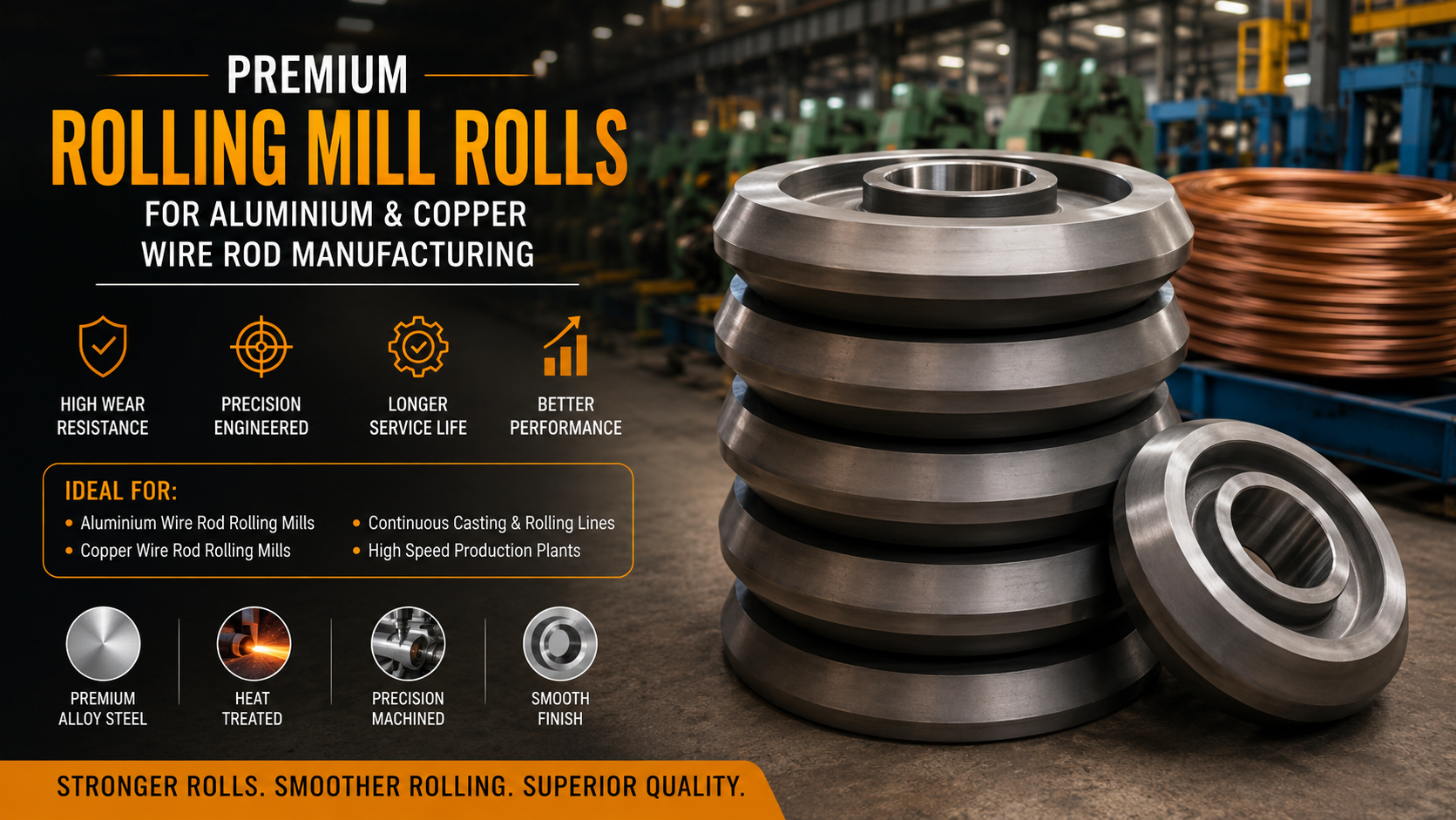
China Rolling Mill Rolls: How to Choose the Right Rolls for Your Mill
China Rolling Mill Rolls: How to Choose the Right Rolls for Your Mill
China rolling mill rolls are widely used as replacement and operating components in different types of rolling mill equipment. For manufacturers operating wire rod mills and other metal processing systems, selecting the correct rolls is important for maintaining dimensional accuracy, surface quality, production stability, and reliable machine performance.
When purchasing replacement rolls, buyers should look beyond price and consider important factors such as roll dimensions, material, hardness, wear resistance, machining accuracy, rolling application, operating conditions, and compatibility with the existing mill.
This guide explains the major factors to consider when selecting China rolling mill rolls and provides practical information for manufacturers looking for suitable replacement rolls for their production equipment.
What Are China Rolling Mill Rolls?
China rolling mill rolls are precision-manufactured rolls designed for use in compatible rolling mill equipment manufactured in China or based on Chinese rolling mill designs and specifications. These rolls are installed in rolling stands and perform the critical function of reducing and shaping metal as it passes through the rolling process.
Replacement rolls may be required because of normal wear, surface damage, dimensional changes, or scheduled maintenance. Correctly manufactured replacement rolls can help restore the required rolling geometry and support consistent production.
Why the Right Rolling Mill Roll Matters
Rolling mill rolls operate under demanding mechanical and thermal conditions. During production, they are exposed to rolling pressure, friction, heat, cooling cycles, and repeated contact with the processed material.
A roll that is incorrectly specified or poorly manufactured can affect the rolling process and may lead to premature wear, dimensional variation, surface defects, vibration, or increased maintenance requirements.
The correct rolling mill roll should therefore be selected according to the actual machine configuration and production conditions.
Key Factors When Choosing China Rolling Mill Rolls
1. Confirm the Existing Mill Specifications
The first step is to identify the exact rolling mill and stand for which the replacement roll is required. Do not select a roll based only on its outside diameter or general appearance.
Before requesting a quotation, collect as much technical information as possible, including:
- Existing roll dimensions
- Roll length
- Roll diameter
- Bore diameter
- Keyway or mounting details
- Roll pass dimensions
- Overall machine configuration
- Existing roll drawings
- Equipment model or identification number
Providing accurate technical information allows the manufacturer to evaluate compatibility and produce the roll according to the required specifications.
2. Select the Appropriate Roll Material
Roll material has a direct influence on wear resistance, strength, surface performance, and service life. The appropriate material depends on the rolling application, processed material, production conditions, and required operating performance.
Depending on the application, rolling mill rolls may be manufactured using suitable alloy steels or other wear-resistant materials. The material should be selected based on engineering requirements rather than using a generic specification for every application.
3. Consider Hardness and Wear Resistance
Rolling mill rolls experience continuous contact and mechanical loading during operation. Adequate hardness and wear resistance are therefore important considerations when selecting replacement rolls.
The required hardness should be matched to the roll material, rolling application, production speed, cooling conditions, and expected operating environment.
Improved wear resistance can help maintain roll geometry for longer periods and reduce the frequency of roll replacement and maintenance.
4. Check Dimensional Accuracy
Precision is essential when manufacturing replacement rolling mill rolls. Small dimensional differences can affect roll alignment, pass geometry, and the resulting product dimensions.
Important dimensions may include:
- Overall roll diameter
- Barrel diameter
- Barrel length
- Bore diameter
- Journal dimensions
- Keyway dimensions
- Pass profile dimensions
- Concentricity
The manufacturer should use appropriate inspection and measurement procedures to verify critical dimensions before the roll is supplied.
5. Evaluate the Roll Surface and Pass Profile
The working surface of a rolling mill roll plays an important role in the rolling process. The surface condition and pass profile should be manufactured according to the required application.
For grooved or pass-type rolls, the geometry must correspond to the required rolling process. Incorrect pass dimensions can affect material flow and finished product dimensions.
Surface finish is also important because excessive roughness, damage, or machining defects can negatively affect rolling performance and product quality.
6. Consider Your Production Material
The material being rolled should always be considered when selecting replacement rolls. Aluminium, copper, and other materials have different processing characteristics and may require different roll specifications.
Provide the supplier with information about:
- Material being processed
- Input dimensions
- Finished product dimensions
- Rolling temperature
- Production speed
- Expected production capacity
- Cooling conditions
This information helps the manufacturer recommend a roll specification appropriate for the application.
7. Check Compatibility With Your Rolling Mill Stand
A replacement roll must be mechanically compatible with the existing rolling mill stand. The roll journals, mounting arrangement, bearings, drive connection, and other interfaces should match the machine configuration.
Compatibility should be verified before manufacturing whenever possible. An existing roll drawing, technical drawing, sample component, or accurate dimensional measurement can help the manufacturer determine the required specifications.
8. Consider Your Operating Speed
Rolling speed is another factor that should be considered when selecting rolls. Higher-speed rolling applications can place greater demands on roll balance, dimensional accuracy, surface quality, cooling, and overall manufacturing precision.
If the mill has been upgraded to operate at a higher production speed, the replacement roll specification should be reviewed rather than simply ordering the same component used under previous operating conditions.
9. Review Cooling Conditions
Cooling conditions can affect roll temperature and operating performance. The roll specification should therefore be considered together with the cooling system used by the rolling mill.
Manufacturers should provide information about the cooling arrangement and operating conditions when discussing replacement rolls with a supplier.
10. Do Not Select Rolls Based Only on Price
Price is an important purchasing consideration, but it should not be the only factor used to compare rolling mill rolls. A lower initial purchase price may not provide the best overall value if the component has poor dimensional accuracy, shorter service life, or inconsistent performance.
A better purchasing evaluation should consider:
- Material quality
- Manufacturing accuracy
- Wear resistance
- Expected service life
- Inspection procedures
- Compatibility
- Replacement availability
- Technical support
- Total operating cost
When Should China Rolling Mill Rolls Be Replaced?
The replacement interval depends on the roll material, production conditions, rolling load, cooling system, operating practices, and maintenance procedures. There is no single replacement interval that applies to every rolling mill.
However, manufacturers should inspect rolls regularly and consider replacement when significant wear or damage begins to affect the rolling process.
Common Signs of Roll Wear
- Visible surface wear
- Pass profile deterioration
- Dimensional inconsistency
- Surface defects on the rolled product
- Increased vibration
- Unexpected changes in rolling performance
- Cracks or other visible damage
- Excessive reduction in roll diameter
What Information Should You Send to a Roll Manufacturer?
Providing complete information can make the quotation and manufacturing process faster and more accurate. When contacting a rolling mill roll supplier, try to provide the following:
- Machine manufacturer
- Rolling mill model
- Stand number
- Existing roll drawing
- Roll photographs
- Roll dimensions
- Material being rolled
- Required finished dimensions
- Production capacity
- Rolling speed
- Required quantity
- Existing roll material, if known
If an original drawing is unavailable, photographs and accurate measurements of the existing component can still help the manufacturer understand the application. Final specifications should be confirmed through appropriate engineering review before production.
China Rolling Mill Rolls for Replacement Applications
Replacement rolls can be required when original components have reached the end of their usable life or when a rolling mill requires additional operating components. Properly specified replacement rolls can help manufacturers maintain production without unnecessarily replacing an entire rolling mill stand.
For buyers operating China-manufactured rolling equipment, it is particularly important to provide the original roll dimensions and machine information so that replacement components can be manufactured for the intended application.
How Laxmi Industries Can Help
Laxmi Industries provides precision-engineered rolling mill equipment and components for industrial metal processing applications. Our product range includes China Rolling Mill Rolls designed for applicable replacement requirements.
We also provide Copper Rolling Mill Rolls, Rolling Mill Stands, Rolling Mill Stand Spare Parts, and Continuous Casting Machines for suitable production applications.
For replacement roll requirements, customers can share their existing component drawings, measurements, photographs, machine details, and production requirements so that the appropriate specifications can be evaluated before manufacturing.
Frequently Asked Questions
What are China Rolling Mill Rolls?
China Rolling Mill Rolls are replacement or operating rolls designed for compatible rolling mill equipment manufactured in China or based on corresponding machine specifications. The exact dimensions and specifications depend on the rolling mill and application.
How do I select the correct rolling mill roll?
Start with the existing roll drawing or accurate measurements. Confirm the roll dimensions, mounting details, pass profile, material being rolled, production speed, cooling conditions, and other operating requirements before ordering.
Can replacement rolls be manufactured according to an existing sample?
In many applications, an existing roll can provide useful dimensional information for developing a replacement component. However, the final manufacturing specification should be confirmed through appropriate engineering and dimensional inspection.
What affects rolling mill roll service life?
Roll material, hardness, rolling load, production speed, cooling conditions, maintenance practices, alignment, and operating conditions can all affect roll wear and service life.
Why is roll dimensional accuracy important?
Dimensional accuracy helps maintain the intended roll geometry and compatibility with the rolling stand. It can also contribute to consistent rolling conditions and finished product dimensions.
Conclusion
Choosing the right China rolling mill rolls requires careful attention to machine compatibility, dimensions, material, hardness, wear resistance, pass profile, surface condition, production speed, and operating environment.
For replacement applications, buyers should provide detailed technical information instead of selecting a roll based only on its appearance or price. A properly specified and accurately manufactured roll can support reliable rolling performance and help reduce unnecessary maintenance interruptions.
If you are looking for China rolling mill rolls or other rolling mill components, contact Laxmi Industries with your roll drawing, dimensions, photographs, or machine details to discuss your requirement.