
How Continuous Casting Machines Improve Wire Rod Production Efficiency
How Continuous Casting Machines Improve Wire Rod Production Efficiency
In today’s competitive metal processing industry, manufacturers are constantly seeking technologies that improve productivity, reduce operating costs, and deliver consistent product quality. One of the most important innovations in modern wire rod manufacturing is the Continuous Casting Machine (CCM). This advanced system enables the continuous production of high-quality aluminium and copper cast bars, providing the perfect foundation for efficient rolling mill operations.
Unlike conventional casting methods that involve multiple handling and reheating processes, continuous casting allows molten metal to solidify directly into cast bars that move seamlessly to the rolling mill. This streamlined production method increases efficiency, minimizes material loss, and ensures superior product consistency.
What is a Continuous Casting Machine?
A Continuous Casting Machine is an industrial system designed to convert molten aluminium or copper into continuously formed cast bars. These cast bars are immediately transferred to downstream rolling equipment, eliminating unnecessary production stages and reducing manufacturing time.
Modern continuous casting technology provides accurate temperature control, stable metal flow, and controlled solidification, ensuring every cast bar meets strict dimensional and metallurgical requirements.
How Does a Continuous Casting Machine Work?
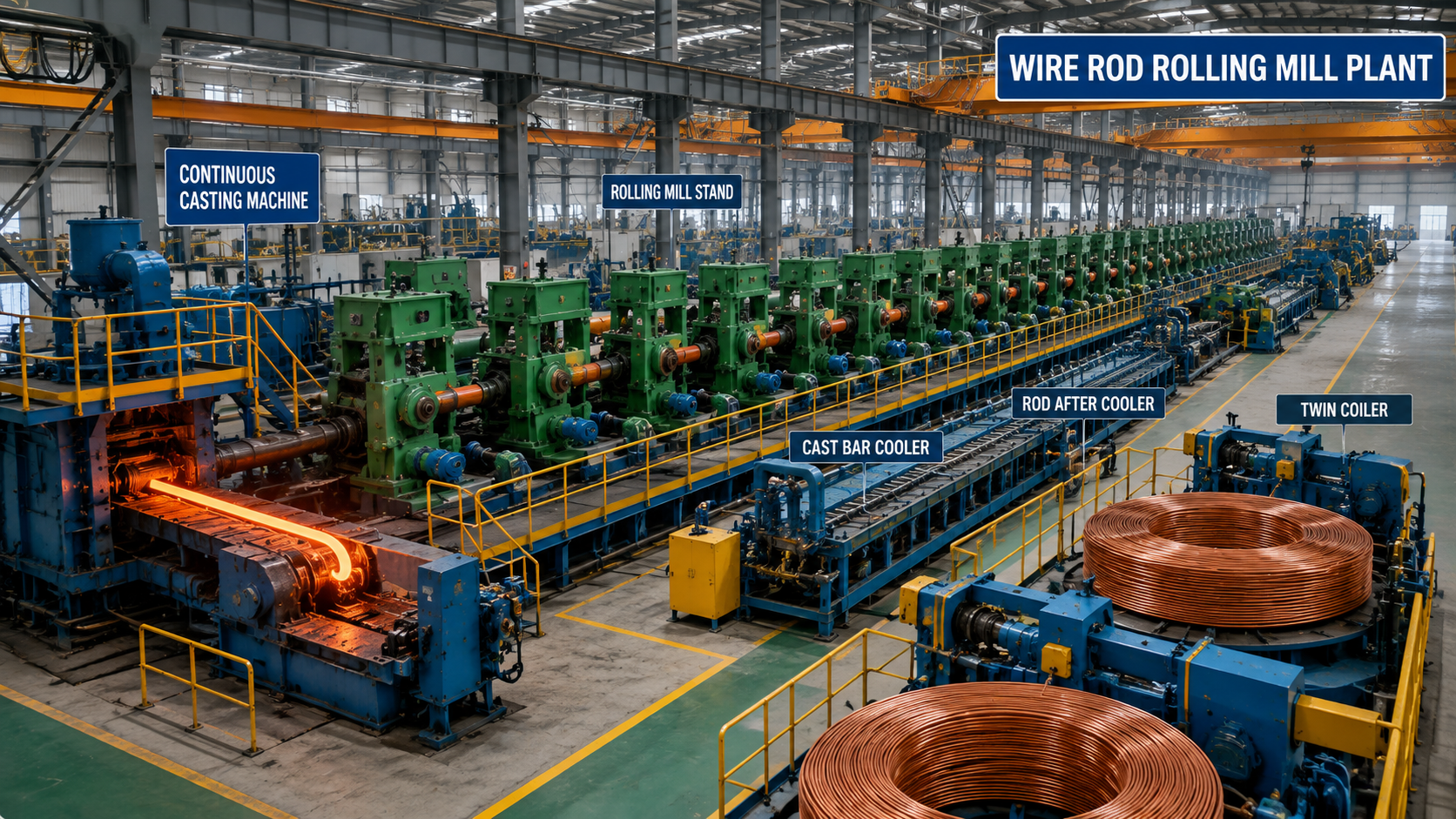
The production process begins by melting high-quality aluminium or copper in a furnace. The molten metal is then transferred into a precision casting system where it passes through a specially designed casting mould. During this stage, the metal gradually solidifies while moving continuously through the casting machine.
After casting, the material passes through controlled cooling systems before reaching the straightening, cutting, and feeding sections. The finished cast bar is then transferred directly into the wire rod rolling mill for further processing into finished wire rods.
Main Components of a Continuous Casting Machine
- Melting Furnace
- Casting Wheel
- Casting Ring Mould
- Cooling System
- Cast Bar Straightener
- Cast Bar Cutter
- Tilter Rod Feeder
- Automatic Drive System
- Temperature Monitoring System
- Electrical Control Panel
Advantages of Continuous Casting Machines
Continuous Casting Machines have become an essential part of modern wire rod manufacturing because they significantly improve overall production efficiency. By producing cast bars in a continuous process, manufacturers can achieve stable production while reducing operational costs and improving product quality.
- Continuous and uninterrupted production.
- Higher production capacity.
- Consistent cast bar dimensions.
- Superior surface finish.
- Reduced material wastage.
- Lower energy consumption.
- Improved metallurgical properties.
- Reduced production downtime.
- Long equipment service life.
- Lower maintenance requirements.
Applications of Continuous Casting Machines
Continuous Casting Machines are widely used across industries that require high-quality aluminium and copper wire rods. Their ability to produce consistent cast bars makes them suitable for a wide range of industrial applications.
- Aluminium Wire Rod Manufacturing Plants
- Copper Wire Rod Manufacturing Plants
- Electrical Cable Manufacturing
- Transformer Wire Production
- Conductor Manufacturing
- Wire Drawing Industries
- Non-Ferrous Metal Processing Plants
- Heavy Engineering Industries
- Power Transmission Equipment Manufacturing
- Industrial Metal Processing Facilities
Why High-Quality Casting Equipment Matters
The quality of a Continuous Casting Machine directly influences the performance of the entire production line. Precision-engineered casting equipment ensures stable molten metal flow, accurate solidification, and consistent cast bar dimensions. These factors contribute to better rolling performance, improved finished product quality, and lower production costs.
Investing in reliable casting machinery also reduces maintenance expenses, minimizes unexpected breakdowns, and increases overall plant productivity by supporting continuous manufacturing operations.
How Continuous Casting Improves Production Efficiency
Continuous casting technology eliminates several traditional manufacturing steps by integrating casting and rolling into a seamless production process. This reduces handling time, minimizes heat loss, improves energy efficiency, and shortens production cycles. As a result, manufacturers can produce more wire rods in less time while maintaining consistent quality throughout the production process.
Choosing the Right Continuous Casting Machine
Selecting the right casting equipment requires careful evaluation of production capacity, material compatibility, automation features, cooling efficiency, machine durability, and after-sales support. A properly designed Continuous Casting Machine not only improves operational efficiency but also delivers long-term reliability and lower maintenance costs.
Why Choose Laxmi Industries?
Laxmi Industries manufactures high-performance Continuous Casting Machines designed to meet the evolving needs of Aluminium and Copper Wire Rod Manufacturing Plants. Our engineering expertise, precision manufacturing processes, and commitment to quality ensure reliable equipment capable of delivering superior productivity and long service life.
In addition to Continuous Casting Machines, we manufacture Wire Rod Rolling Mills, Twin Coilers, Rolling Mill Stands, Rolling Mill Rolls, Cast Bar Straighteners, Cast Bar Cutters, Rod Feeders, Cooling Systems, Casting Ring Moulds, and a complete range of precision-engineered rolling mill spare parts for modern metal processing industries.
Conclusion
Continuous Casting Machines have transformed the production of aluminium and copper wire rods by delivering higher productivity, improved quality, and lower manufacturing costs. Their ability to provide continuous, efficient, and reliable production makes them an essential investment for modern rolling mill plants. By choosing advanced casting technology, manufacturers can improve operational efficiency, reduce downtime, and remain competitive in today’s fast-growing metal processing industry.