
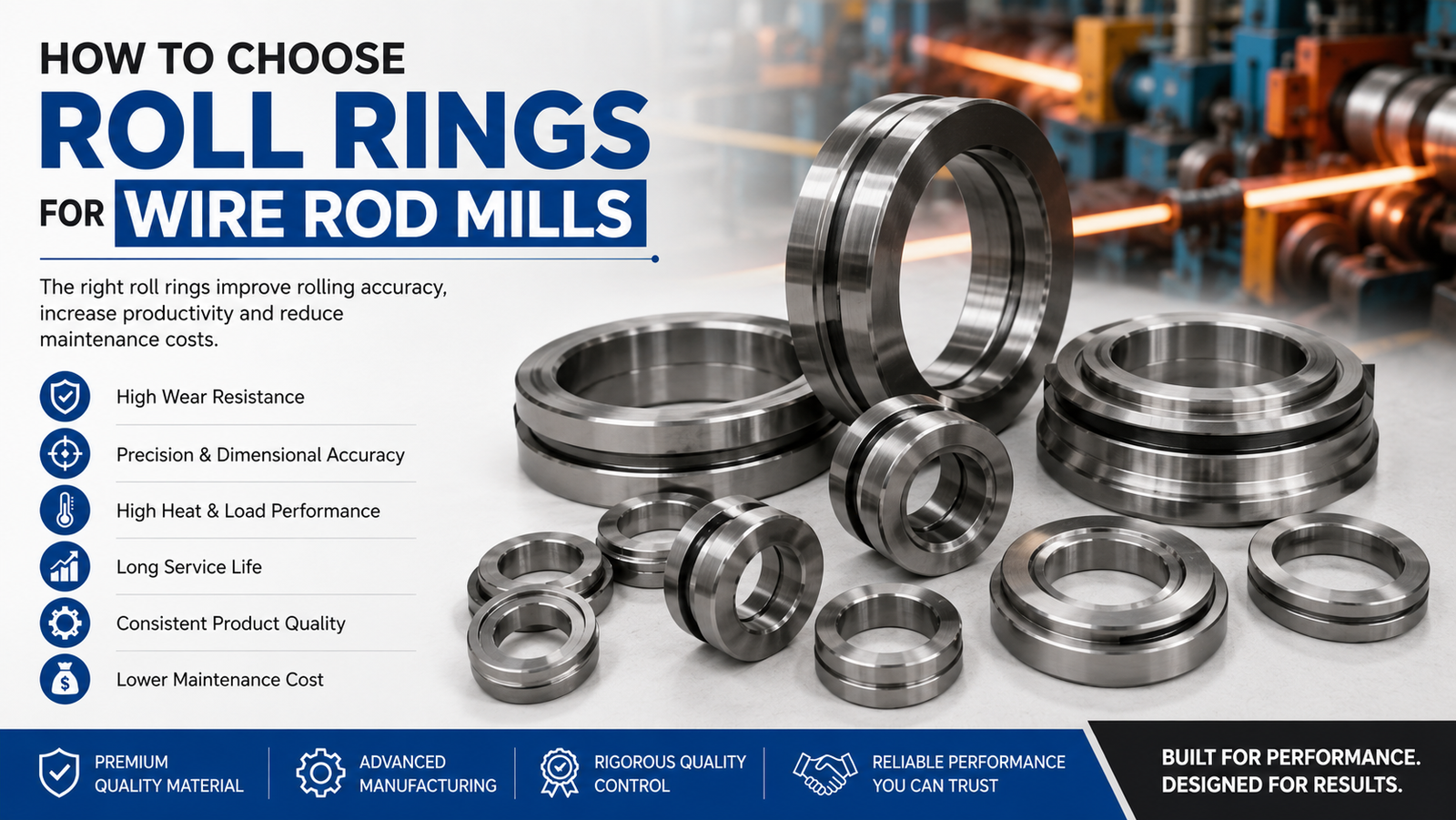
How to Choose Roll Rings for Wire Rod Mills
How to Choose Roll Rings for Wire Rod Mills
Roll rings are among the most important wear components used in modern wire rod rolling mills. They directly influence rolling accuracy, surface finish, production efficiency, and overall operating costs. Selecting the correct roll rings helps manufacturers achieve stable production, minimize downtime, and improve the quality of finished aluminium and copper wire rods.
Choosing the right roll rings requires more than simply selecting the correct size. Material composition, hardness, wear resistance, rolling speed, cooling conditions, and production capacity all contribute to long-term performance. Understanding these factors allows manufacturers to maximize equipment life while maintaining consistent product quality.
What Are Roll Rings?
Roll rings are precision-engineered circular rolling elements mounted on rolling mill shafts. During the rolling process, they gradually reduce the diameter of the metal while maintaining dimensional accuracy and producing a smooth surface finish. Modern roll rings are manufactured from high-performance materials capable of operating under high pressure, elevated temperatures, and continuous production conditions.
Why Selecting the Right Roll Rings Is Important
Poor-quality or incorrectly selected roll rings can result in excessive wear, unstable rolling, poor surface finish, dimensional variation, and frequent production interruptions. Properly engineered roll rings provide smoother rolling, longer service life, and improved production efficiency.
- Improves rolling accuracy.
- Enhances wire rod surface quality.
- Extends roll service life.
- Reduces machine downtime.
- Lowers operating costs.
- Supports continuous production.
- Minimizes vibration during rolling.
- Improves production consistency.
Factors to Consider When Choosing Roll Rings
1. Material Selection
Different rolling applications require different roll ring materials. High-grade alloy steel and carbide roll rings are commonly used because they provide excellent hardness, wear resistance, and dimensional stability during continuous production.
2. Hardness
The hardness of the roll ring directly affects its wear resistance and operational life. Selecting the appropriate hardness depends on the rolling material, production speed, and required product quality.
3. Wear Resistance
Superior wear resistance reduces the frequency of roll replacement, helping manufacturers lower maintenance costs and increase production uptime.
4. Dimensional Accuracy
Precision machining ensures uniform material reduction throughout the rolling process. Accurate roll rings contribute to consistent wire rod diameter and improved finished product quality.
5. Production Capacity
High-speed production lines require roll rings capable of operating continuously without excessive heat generation or premature wear. Selecting roll rings that match production capacity improves operational reliability.
6. Cooling System Compatibility
Effective cooling increases roll life and helps maintain dimensional stability during continuous rolling operations.
Common Materials Used for Roll Rings
- High Alloy Steel
- Tungsten Carbide
- Tool Steel
- Composite Materials
- Special Wear-Resistant Alloys
Applications of Roll Rings
- Aluminium Wire Rod Rolling Mills
- Copper Wire Rod Manufacturing Plants
- Continuous Casting & Rolling Lines
- Electrical Cable Manufacturing
- Conductor Manufacturing
- Non-Ferrous Metal Processing Plants
- Engineering Industries
- Industrial Metal Processing Facilities
Maintenance Tips for Longer Roll Ring Life
- Inspect roll rings before every production cycle.
- Maintain proper cooling throughout operation.
- Ensure accurate roll alignment.
- Replace damaged rings immediately.
- Monitor vibration during production.
- Maintain recommended rolling pressure.
- Store spare roll rings in a clean, dry location.
- Follow preventive maintenance schedules.
Signs That Roll Rings Need Replacement
- Visible wear or surface damage.
- Loss of dimensional accuracy.
- Poor wire rod surface finish.
- Increased rolling vibration.
- Frequent production interruptions.
- Reduced production efficiency.
Choosing a Reliable Manufacturing Partner
Selecting an experienced rolling mill equipment manufacturer is equally important as selecting the correct roll rings. Precision manufacturing, strict quality control, advanced machining technology, and dependable technical support ensure long-lasting industrial performance and reliable production.
Why Choose Laxmi Industries?
Laxmi Industries manufactures precision-engineered solutions for aluminium and copper wire rod manufacturing plants. Our product portfolio includes Rolling Mill Stands, China Rolling Mill Rolls, Copper Rolling Mill Rolls, Rolling Mill Stand Spare Parts, Continuous Casting Machines, Twin Coilers, Cast Bar Straighteners, Cast Bar Cutters, Cast Bar Coolers, Rod After Coolers, Coiler Traverse Systems, Tilter Rod Feeders, and Casting Ring Moulds.
Our engineering team focuses on delivering durable, precision-manufactured equipment designed to improve productivity, reduce maintenance requirements, and support long-term industrial performance.
Conclusion
Selecting the right roll rings is essential for maintaining production efficiency, achieving consistent wire rod quality, and reducing long-term operating costs. By considering material quality, hardness, wear resistance, dimensional accuracy, and production requirements, manufacturers can improve equipment reliability and extend component life. Working with an experienced engineering partner like Laxmi Industries ensures dependable solutions that support efficient and sustainable rolling mill operations.