

Wire Rod Mill Expansion: How to Increase Capacity of an Existing Line
As demand grows, many wire rod producers reach the limit of their existing line. Building a completely new plant is one option, but expanding the current mill can often deliver more output at lower cost and in less time. A successful expansion starts with understanding what limits production today and which improvements will make the biggest difference.
Why Expand an Existing Mill?
- Use existing buildings, foundations, and utilities
- Lower investment than a new plant
- Shorter project timeline
- Keep experienced operating teams
- Build on known processes and customers
Step 1: Measure Current Performance
Before planning any expansion, collect accurate data:
- Actual hourly output by product size
- Running hours per month
- Downtime by cause
- Yield and scrap levels
- Energy consumption per tonne
This data shows whether the line is limited by its equipment capacity or by lost time and yield.
Step 2: Find the Bottleneck
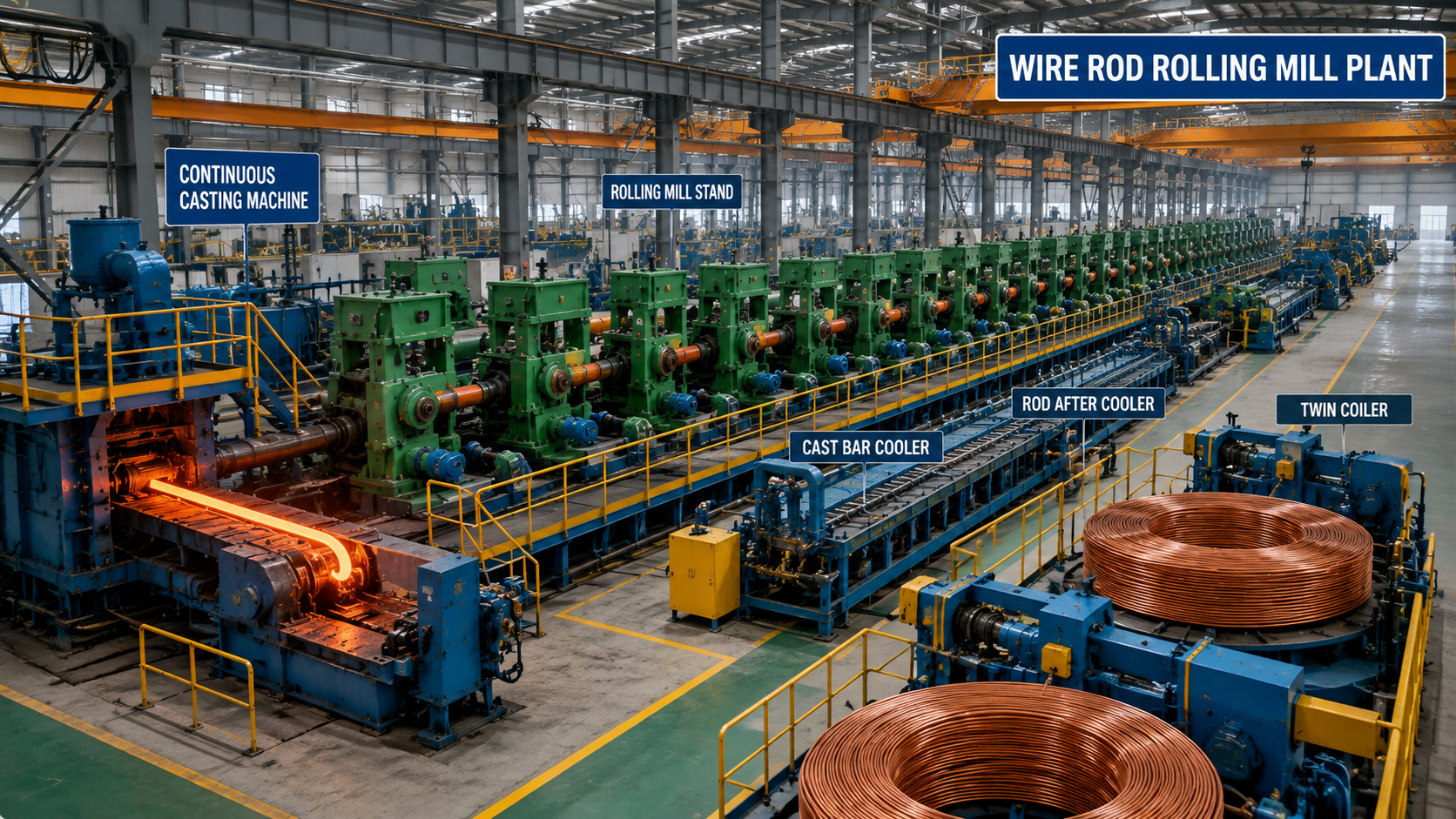
In a continuous casting and rolling line, the slowest section sets the output. Common bottlenecks include:
- Melting furnace capacity
- Continuous casting machine output
- Rolling mill speed or drive power
- After-cooling capacity at higher speeds
- Coiling and coil handling
Increasing capacity in a section that is not the bottleneck does not raise total output.
Step 3: Consider Low-Cost Gains First
Sometimes significant capacity is available without major new equipment:
- Reducing unplanned downtime
- Shortening roll changes
- Improving yield
- Reducing start-up scrap
- Better scheduling of product sizes
These improvements often pay back quickly and should be considered before large investments.
Step 4: Evaluate Expansion Options
Option A: Increase Speed
Running the mill faster can raise output, but every section must handle the higher speed. Check drives, gears, bearings, cooling, coilers, and casting supply.
Option B: Add or Upgrade Stands
Adding rolling mill stands can allow larger input sections or smaller finished sizes. Replacing older stands with stronger designs can increase reduction per pass.
Option C: Increase Casting and Melting Capacity
If the casting machine or furnace is the bottleneck, upgrading these sections may be the key step.
Option D: Upgrade Finishing Equipment
Higher output requires matching cooling, coiling, and handling capacity.
Option E: Build a Second Line
When the existing line cannot be expanded further, a second line may be the most practical way to increase capacity.
Step 5: Check Utilities
Expansion usually increases demand for:
- Electrical power
- Cooling water
- Compressed air
- Fuel for melting
- Water treatment capacity
Utilities that were sized for the original line may need upgrading.
Step 6: Plan Space and Layout
Additional equipment needs space for installation, operation, and maintenance. Review the layout for crane coverage, access routes, and storage space for extra coils.
Step 7: Plan Downtime Carefully
Expansion work often requires the line to stop. To reduce lost production:
- Prepare foundations in advance
- Pre-assemble and test new equipment
- Schedule work during planned shutdowns
- Split the work into phases where possible
Step 8: Update Controls and Automation
New equipment and higher speeds require updated speed coordination, interlocks, and settings. Plan control system changes alongside mechanical work.
Step 9: Train Teams
Operators and maintenance staff must understand new equipment and settings. Training should happen before restart.
Step 10: Measure Results
After expansion, compare output, yield, downtime, and energy use with the baseline to confirm the expected benefits.
Common Expansion Mistakes
- Upgrading the wrong section of the line
- Ignoring utility limits
- Underestimating installation downtime
- Forgetting coil handling and storage capacity
- Not updating spare parts for new equipment
A Simple Bottleneck Test
One practical way to confirm the bottleneck is to look at each section’s maximum sustainable rate:
- How fast can the furnace supply metal for a full shift?
- What is the highest stable casting speed?
- What is the highest rolling speed at which the mill runs without extra cobbles?
- Can cooling bring rod to the required temperature at that speed?
- Can coilers and handling keep pace without delays?
The lowest of these figures is your real capacity. Expansion money should go to that section first.
Phasing an Expansion
Large expansions do not have to be done in one shutdown. A phased plan might be:
- **Phase 1:** reduce downtime and improve yield with existing equipment
- **Phase 2:** upgrade the current bottleneck, such as casting or coiling
- **Phase 3:** add stands or raise speed once supporting sections are ready
- **Phase 4:** review results and plan the next step
Phasing spreads investment, limits risk, and lets the team learn at each stage.
Keeping Customers Supplied During the Project
Expansion work often reduces output for a period. Building stock before major shutdowns, informing key customers, and scheduling work in lower-demand months helps protect customer relationships while the line is being upgraded.
Why Choose Laxmi Industries?
Laxmi Industries supplies Wire Rod Rolling Mills, Rolling Mill Stands, Continuous Casting Machines, Rod After Coolers, and Twin Coilers for both new plants and expansion projects, with equipment designed around the customer’s existing layout.
Frequently Asked Questions
How can I increase wire rod mill capacity?
Options include reducing downtime, increasing speed, adding stands, upgrading casting or melting, and upgrading coiling and cooling.
What is a bottleneck?
It is the section of the line that limits total output.
Is it cheaper to expand or build a new line?
Expansion is often cheaper if the existing line and utilities can support it. A detailed assessment is needed.
Do utilities need upgrading?
Often yes, especially power, cooling water, and compressed air.
Conclusion
A well-planned expansion can significantly increase wire rod output while using existing assets. Measuring current performance, finding the true bottleneck, considering low-cost gains, and planning utilities and downtime carefully are the keys to success.
Contact Laxmi Industries with your current line details and capacity targets to discuss expansion options.
