

Turnkey vs Equipment-Only Supply for Wire Rod Mill Projects
When planning a new wire rod mill or a major expansion, one of the first decisions is how the project will be contracted. Some manufacturers prefer a turnkey approach, where one company is responsible for most of the project. Others prefer to buy equipment only and manage the rest themselves. Each approach has advantages and risks.
What Is a Turnkey Project?
In a turnkey project, the supplier takes responsibility for design, equipment supply, installation, commissioning, and often performance of the line. Depending on the contract, the scope may also include engineering for civil works, utilities, and electrical systems. The customer receives a working line ready for production.
What Is Equipment-Only Supply?
In an equipment-only contract, the supplier designs and manufactures the machines and delivers them. The customer is responsible for civil works, installation, utilities, electrical integration, and commissioning, sometimes with supervision from the supplier.
Advantages of Turnkey Supply
- Single point of responsibility
- Better coordination between equipment, layout, and utilities
- Fewer interface problems
- Supplier is accountable for line performance
- Less management burden on the customer
Limitations of Turnkey Supply
- Higher contract value
- Less direct control over each item
- Customer depends heavily on one supplier
Advantages of Equipment-Only Supply
- Lower initial contract value
- More control over local work and suppliers
- Flexibility to use existing teams and contractors
Limitations of Equipment-Only Supply
- Customer manages many interfaces
- Risk of gaps between suppliers’ scopes
- Delays in one area can affect others
- Performance responsibility may be unclear
Hybrid Approaches
Many projects use a middle path, such as:
- Equipment supply with installation supervision and commissioning by the supplier
- Turnkey supply for the casting and rolling line, with civil works by the customer
- Phased supply, starting with critical equipment
How to Decide
Assess Your Team
Do you have engineers experienced in rolling mill projects? If not, a turnkey or supervised approach reduces risk.
Assess the Project Size
Larger, more complex projects have more interfaces and often benefit from turnkey responsibility.
Consider Timeline
Turnkey projects can be faster because coordination is handled by one party.
Consider Budget and Cash Flow
Equipment-only supply may suit tighter budgets if the customer can manage the rest efficiently.
Consider Performance Guarantees
If production targets are critical, a supplier responsible for the complete line can provide clearer performance commitments.
Defining Scope Clearly
Whatever approach is chosen, scope must be defined in detail. A scope matrix listing each item and who is responsible avoids misunderstandings. Typical items include:
- Process design and layout
- Mechanical equipment
- Electrical and automation
- Civil and structural design
- Utilities, such as water, air, and power
- Installation
- Commissioning
- Training
- Spare parts
Interfaces That Often Cause Problems
- Foundation drawings and civil works timing
- Electrical cable supply and installation
- Cooling water system capacity
- Control system integration between suppliers
- Crane capacity and building height
Clarifying these interfaces early reduces the risk of delays and extra costs.
Questions to Ask Potential Suppliers
- Which parts of the line do you manufacture yourselves?
- Can you provide installation and commissioning?
- What performance commitments can you offer?
- How do you handle utilities and civil interfaces?
- What after-sales support is available?
Example Scope Split for a Mixed Contract
Many plants choose a middle path. A typical split might look like this:
- **Supplier:** process design, layout, casting and rolling equipment, auxiliary equipment, installation supervision, commissioning, training
- **Customer:** land, building, civil works, foundations from supplier drawings, power connection, cooling water system, local labour, raw material for trials
- **Shared:** electrical installation, with the supplier providing drawings and the customer providing cables and contractors
Writing this split down early prevents tasks falling between parties.
Managing Risk in Each Model
In a Turnkey Contract
- Agree clear performance tests and acceptance criteria
- Agree how delays caused by either party are handled
- Review design documents at defined stages
In an Equipment-Only Contract
- Appoint an experienced project manager on the customer side
- Hold regular coordination meetings between all contractors
- Check foundation drawings against equipment drawings before pouring concrete
- Plan commissioning support from the supplier even if installation is local
Thinking Beyond Start-Up
The contract model also affects support after commissioning. A supplier responsible for the whole line usually has a stronger interest in solving early problems quickly. In equipment-only contracts, agree in advance how technical support and spare parts will be provided in the first year of operation.
Why Choose Laxmi Industries?
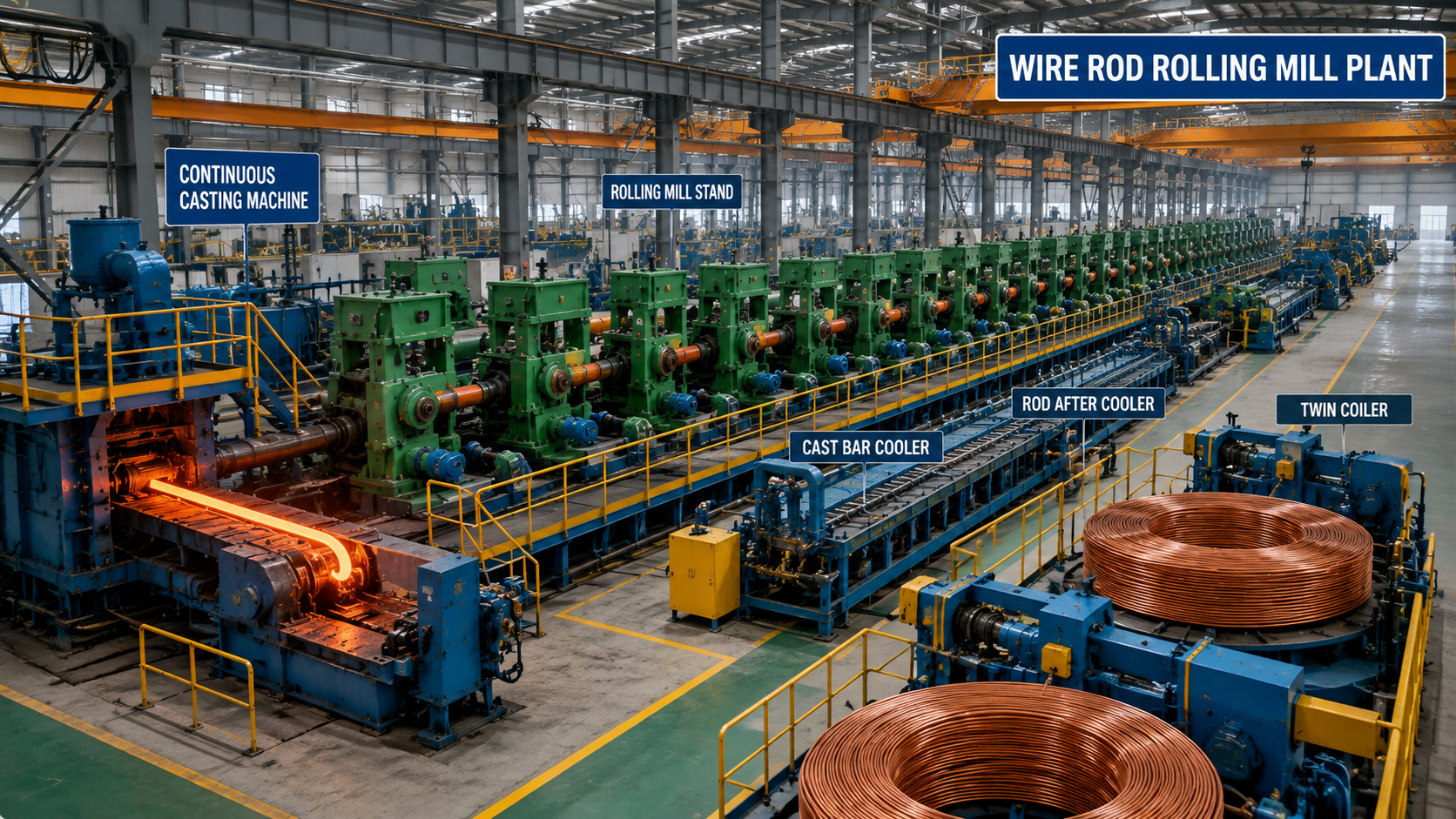
Laxmi Industries offers turnkey solutions for wire rod production, covering design and engineering, precision manufacturing, inspection, installation, commissioning, and after-sales support. Equipment includes Continuous Casting Machines, Wire Rod Rolling Mills, Rolling Mill Stands, Rod After Coolers, and Twin Coilers. Customers can also choose equipment supply with supervision, depending on their needs.
Frequently Asked Questions
What is a turnkey wire rod mill project?
A project where one supplier is responsible for design, equipment, installation, and commissioning, delivering a working line.
Is turnkey always more expensive?
The contract value is usually higher, but it can reduce hidden costs from delays and interface problems.
Can I choose a mixed approach?
Yes. Many projects combine equipment supply with supplier supervision and commissioning.
Why is a scope matrix important?
It clearly defines who is responsible for each part of the project.
Conclusion
Turnkey and equipment-only supply both have a place in wire rod mill projects. The right choice depends on your team’s experience, project size, timeline, budget, and need for performance accountability. Clear scope and well-managed interfaces are essential in every case.
Contact Laxmi Industries to discuss turnkey or equipment supply options for your wire rod mill project.
