

Buying Rolling Mill Machinery from India: A Guide for Overseas Buyers
India has a large and experienced rolling mill machinery industry, supplying equipment for steel, copper, and aluminium plants in many countries. For overseas buyers, purchasing from an Indian manufacturer can offer practical engineering, competitive pricing, and suppliers familiar with a wide range of plant sizes. Like any international purchase, success depends on clear specifications, good communication, and careful planning of shipping and installation.
Why Buyers Consider Indian Manufacturers
- Experience with many plant sizes, from small to large
- Familiarity with steel, copper, and aluminium processes
- Ability to supply complete lines and spare parts
- Engineering support for installation and commissioning
- Practical designs suited to a wide range of operating conditions
Step 1: Define Your Requirements Clearly
Before requesting quotations, prepare:
- Metal type and grades
- Capacity and product size range
- Raw material or feedstock details
- Available space and building dimensions
- Power supply voltage and frequency
- Water quality and availability
- Local standards or regulations
Clear requirements lead to accurate quotations and fewer changes later.
Step 2: Check Electrical Compatibility
Electrical supply varies between countries. Confirm voltage, frequency, and any local electrical standards so that motors, drives, and panels are supplied correctly.
Step 3: Evaluate the Manufacturer
- Range of equipment manufactured in-house
- Experience with similar projects
- Engineering and design capability
- Inspection and testing process
- Installation and commissioning support
- Spare parts availability
Video calls, factory visits, and references from other customers help build confidence.
Step 4: Agree on Technical Documents
Ask for:
- Layout drawings
- Foundation drawings
- Utility requirements
- Equipment specifications
- Operation and maintenance manuals
- Recommended spare parts list
Step 5: Plan Pre-Dispatch Inspection
Many buyers arrange inspection at the factory before shipment, either personally or through a nominated inspector. Agree in advance what will be checked, such as dimensions, assembly, trial running, and documentation.
Step 6: Packing for Export
Rolling mill machinery is heavy and contains precision surfaces. Export packing should:
- Protect machined surfaces from corrosion
- Secure parts against movement
- Use suitable crates or frames
- Clearly label each package
- Include packing lists for each case
Step 7: Shipping and Logistics
Agree the delivery terms clearly, such as who is responsible for freight, insurance, and customs clearance. Large equipment may need special handling at ports and during inland transport.
Step 8: Customs and Documentation
Typical shipping documents include commercial invoices, packing lists, bills of lading, and certificates of origin where required. Buyers should check local import requirements in advance.
Step 9: Installation and Commissioning Abroad
Discuss how installation will be handled:
- Supervision by the manufacturer’s engineers
- Local installation contractors
- Commissioning support
- Operator training
Plan visas, travel, and accommodation for visiting engineers early.
Step 10: Long-Term Support
After commissioning, buyers need:
- Spare parts supply
- Remote technical support
- Site visits when required
Agree how support requests will be handled and how quickly spares can be shipped.
Common Mistakes to Avoid
- Incomplete specifications
- Not confirming electrical compatibility
- Unclear delivery terms
- Skipping pre-dispatch inspection
- Not planning spare parts for start-up
- Delaying civil works until equipment arrives
Communicating Across Time Zones and Languages
International projects run more smoothly when communication is planned:
- Agree a single technical contact on each side
- Confirm all technical decisions in writing
- Use drawings and photos to avoid misunderstandings
- Schedule regular video meetings during design and manufacturing
- Agree on units of measurement and standards early
Clear communication reduces the risk of errors that are expensive to correct once equipment has shipped.
Preparing Your Local Team
Before equipment arrives, prepare a local team that will work alongside visiting engineers. Include mechanical fitters, electricians, and future operators. When local staff take part in installation and commissioning, they learn the equipment in detail and can support it after the visiting team leaves.
Planning Spares for Remote Locations
For plants far from the manufacturer, shipping spare parts takes time. It is wise to order a larger initial stock of critical spares with the main equipment, including rolls, guides, bearings, seals, and key electrical components. This reduces the risk of long stoppages while waiting for international deliveries.
Checking Local Service Options
Find out whether local workshops can carry out basic machining, welding, and repairs. Combining local services with support from the equipment supplier gives the plant more flexibility in handling day-to-day maintenance.
Why Choose Laxmi Industries?
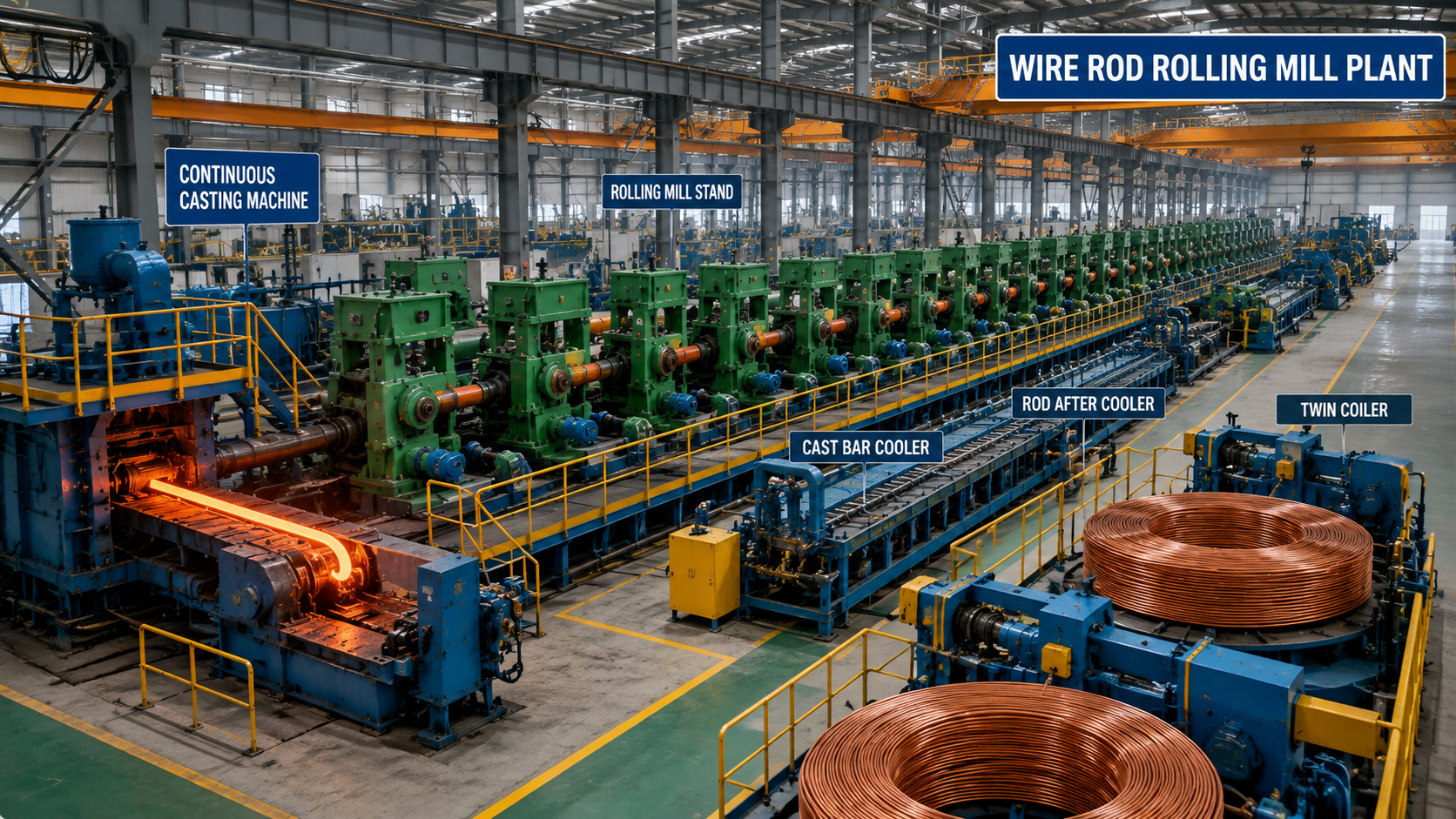
Laxmi Industries, based in Faridabad, India, has been engineering rolling mill machinery since 1985. The company manufactures Continuous Casting Machines, Wire Rod Rolling Mills, Rolling Mill Stands, and spare parts, and offers design, inspection, installation, commissioning, and after-sales support.
Frequently Asked Questions
Can Indian manufacturers supply complete rolling mill lines abroad?
Yes. Many manufacturers supply complete lines, equipment, and spare parts to overseas customers.
Should I inspect equipment before shipping?
Pre-dispatch inspection helps confirm that equipment meets agreed specifications.
What about electrical supply differences?
Confirm voltage, frequency, and local standards so equipment is supplied correctly.
Who installs the equipment abroad?
Usually the manufacturer supervises installation and commissioning, often working with local contractors.
Conclusion
Buying rolling mill machinery from India can be a practical choice for overseas producers. Clear specifications, careful supplier evaluation, inspection, export packing, and planned installation support help make the project successful.
Contact Laxmi Industries with your project requirements to discuss rolling mill machinery for your plant.
