

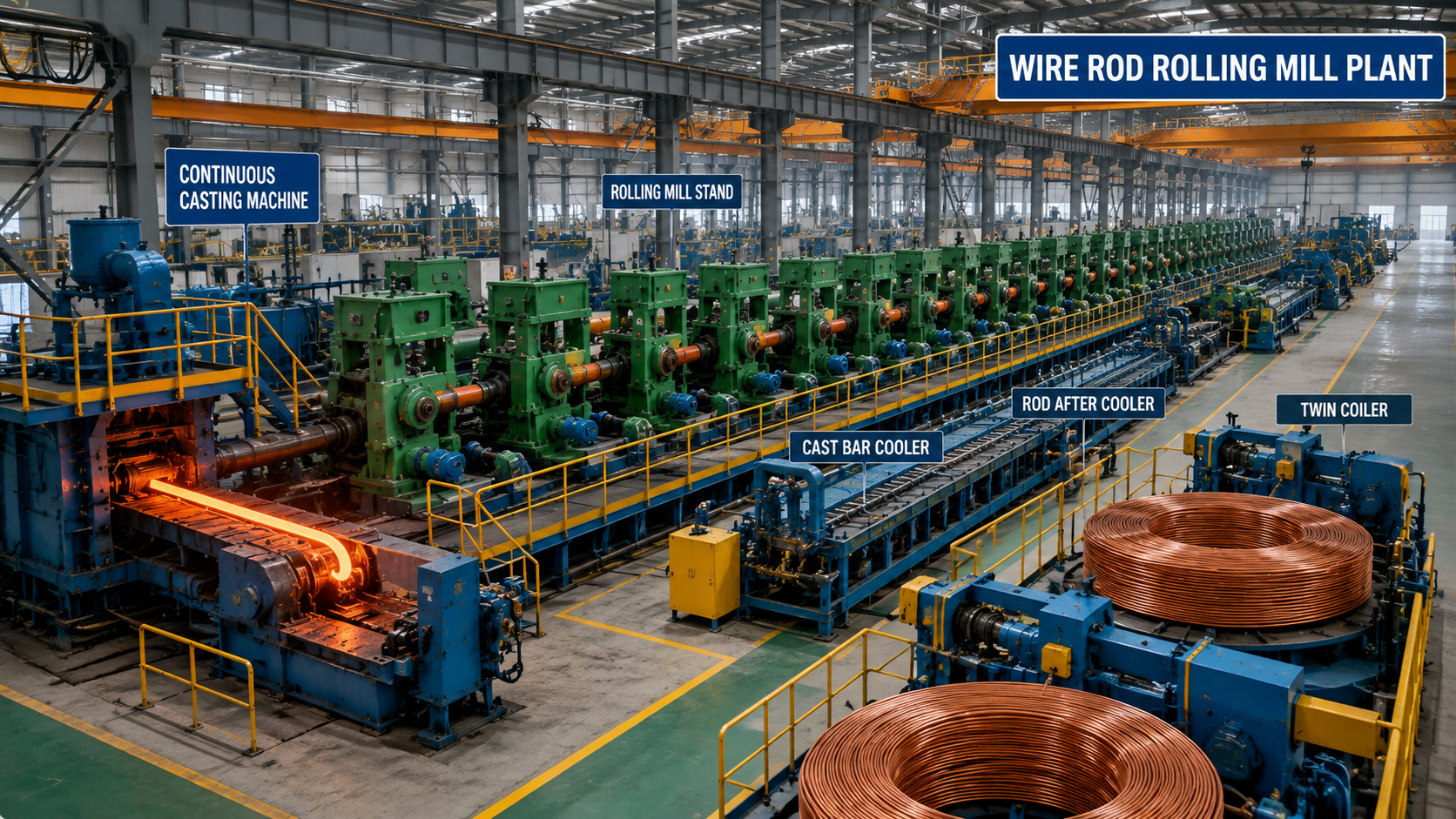
Rolling Mill Spare Parts for Steel Plants: What to Stock and How to Source
Steel rolling mills work in tough conditions. Hot billets, heavy scale, high rolling forces, and long operating hours put constant pressure on mechanical components. A reliable supply of spare parts is essential to keep bar, rod, and TMT mills running. This guide covers the main spare parts used in steel rolling mills and how to plan their supply.
Why Steel Mills Need Careful Spares Planning
- High temperatures accelerate wear
- Scale is abrasive and damages guides and rolls
- Heavy loads stress bearings, gears, and couplers
- Cobbles cause sudden damage
- Long production runs leave limited time for repairs
Main Spare Parts Categories
1. Rolls
Rolls wear continuously and must be reconditioned or replaced. Steel mills often use different roll materials for roughing, intermediate, and finishing stands.
2. Roll Rings
High-speed finishing sections often use roll rings mounted on shafts.
3. Guides and Guide Parts
Entry guides, exit guides, roller guides, and twist guides wear quickly due to contact with hot steel and scale. Guide rollers, bearings, and inserts are frequent replacement items.
4. Bearings and Chocks
Roll neck bearings and their chocks carry heavy rolling loads.
5. Couplers and Spindles
Couplers and spindles transmit torque and are vulnerable to shock loads during cobbles.
6. Gears and Pinions
Gearboxes and pinion stands need spare gears, shafts, and bearings.
7. Adjustment Parts
Screws, nuts, pivots, pins, and bushes control roll position.
8. Shear Blades
Crop and cobble shears need sharp blades for clean cuts.
9. Seals and Wear Plates
Seals protect bearings from water and scale. Wear plates protect structures from abrasion.
10. Cooling and Lubrication Parts
Nozzles, hoses, filters, and fittings keep cooling and lubrication systems working.
Spare Parts for Different Mill Types
Bar and TMT Mills
Often need guides, rolls, shear blades, cooling bed parts, and quenching system components.
Wire Rod Mills
Often need roll rings, high-speed bearings, finishing block parts, laying head parts, and guides.
Section Mills
Often need specially shaped rolls and guides for each product.
Planning Stock Levels
- Identify critical parts that would stop production
- Record consumption of wear parts
- Check supplier lead times
- Set minimum and reorder levels
- Review stock after mill changes or new products
Sourcing Options
Original Manufacturer
Provides original designs but may have long lead times, especially for imported mills.
Qualified Local Manufacturer
Can supply compatible parts with shorter lead times, provided quality is controlled.
In-House Workshop
Some plants make simple parts in their own workshops.
Many steel plants use a mix of these sources depending on the part.
Quality Checks for Steel Mill Spares
- Dimensional inspection against drawings
- Material verification
- Hardness checks for heat-treated parts
- Surface finish checks on bearing seats and sliding faces
- Trial fitting for new suppliers
Reducing Spare Parts Consumption
Better maintenance reduces how many spares are needed:
- Good lubrication extends bearing and gear life
- Proper alignment reduces uneven wear
- Effective descaling protects guides and rolls
- Fewer cobbles mean less shock damage
- Correct cooling reduces roll thermal damage
A Practical Critical Spares List for Steel Mills
Every plant is different, but many steel rolling mills keep the following critical items on hand:
- At least one spare roll set for each finishing stand
- Spare guide assemblies for every stand position
- Bearings for each stand type
- Spare couplers or spindle parts for main drives
- Shear blades for crop, cobble, and cold shears
- Seals and gaskets for gearboxes
- Critical motor and drive spares
- Spare nozzles for descaling and quenching systems
Reviewing this list against actual breakdown history helps refine it over time.
Working with Suppliers on Lead Times
Lead times can be reduced by:
- Sharing annual forecasts of consumption
- Agreeing on standard drawings for repeat parts
- Placing frame orders for regular wear items
- Holding supplier-managed stock for high-use parts
These arrangements help suppliers plan production and deliver faster when parts are needed.
Tracking Parts Performance
Record the life achieved by each spare part, such as tonnage per guide or hours per bearing. Comparing results between suppliers and materials shows which parts deliver the best value, not just the lowest price.
Why Choose Laxmi Industries?
Laxmi Industries manufactures rolling mill machinery and spare parts for the aluminium, copper, and steel industries, including Spare Parts for Rolling Mill Stands, Rolling Mill Stands, couplers, pivots, and rolls, made with high-grade materials and inspected before dispatch.
Frequently Asked Questions
Which spare parts wear fastest in steel mills?
Rolls, guides, guide rollers, shear blades, and seals are among the fastest-wearing parts.
Should steel plants buy compatible spare parts?
Compatible parts from qualified manufacturers can reduce lead times, provided fit and quality are verified.
How do I decide stock levels?
Consider criticality, lead time, and consumption history.
How can spare parts consumption be reduced?
Through good lubrication, alignment, descaling, cobble prevention, and cooling.
Conclusion
Steel rolling mills depend on a reliable supply of quality spare parts. Understanding which parts are critical, planning stock levels, choosing reliable sources, and improving maintenance practices all help keep downtime low and production steady.
Contact Laxmi Industries with your drawings or part requirements to discuss spare parts for your steel rolling mill.
