

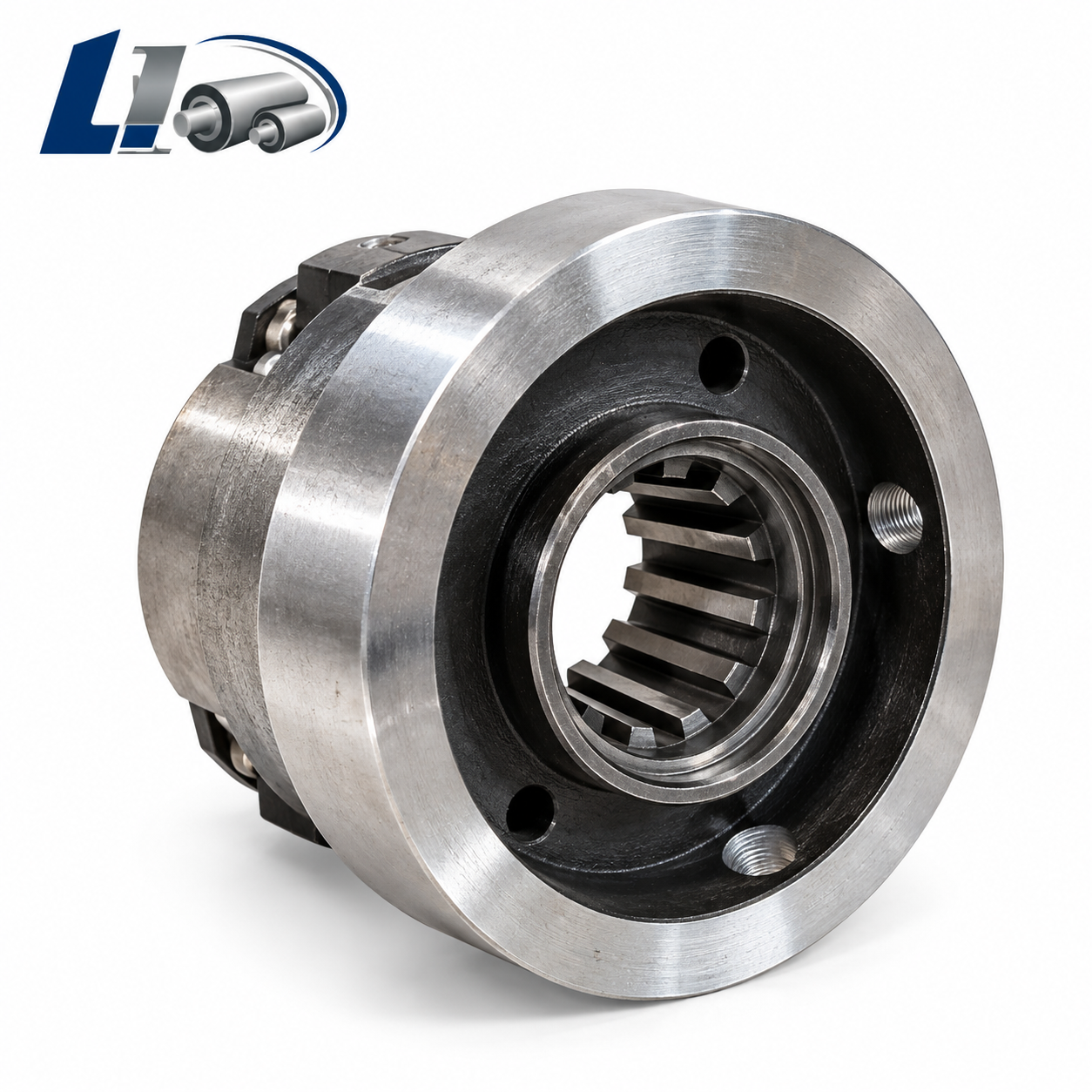
Couplers for Rolling Mills: Types, Selection and Maintenance
Power from motors and gearboxes must be transmitted reliably to the rolls of each stand. Couplers connect these rotating parts and carry torque while allowing for small misalignments. A failed or worn coupler can stop a stand, so correct selection and maintenance are essential.
What Is a Rolling Mill Coupler?
A coupler is a mechanical connection between two rotating shafts, such as a gearbox output and a roll shaft or spindle. It transmits torque and can also accommodate limited movement between the connected parts, depending on its design.
Functions of a Coupler
- Transmitting torque from the drive to the roll
- Accommodating small angular or offset misalignments
- Allowing disconnection for roll changes and maintenance
- Reducing transmission of shock loads, depending on design
Common Coupler Types in Rolling Mills
Rigid Couplers
Rigid couplers provide a solid connection between shafts that are accurately aligned. They are simple but do not tolerate misalignment.
Flexible Couplers
Flexible couplers allow small misalignments and may absorb some shock. They are used where perfect alignment cannot always be maintained.
Gear-Type Couplers
Gear couplers use meshing teeth to transmit high torque while allowing limited angular movement. They need proper lubrication.
Spindle and Wobbler-Type Connections
Some stands use spindles with end connections that allow the rolls to be adjusted while remaining connected to the drive.
Selection Factors
1. Torque Requirement
The coupler must handle the normal and peak torque of the stand.
2. Speed
Operating speed affects balance, design, and lubrication requirements.
3. Misalignment Allowance
Consider the expected misalignment between drive and roll shafts.
4. Space and Fit
The coupler must fit within the available space and match shaft dimensions.
5. Ease of Maintenance
Quick connection and disconnection supports faster roll changes.
Signs of Coupler Problems
- Unusual noise or knocking
- Vibration in the drive line
- Heat at the coupler
- Visible wear, cracks, or tooth damage
- Lubricant leakage
- Play or backlash during start-up
Maintenance Practices
- Inspect couplers during scheduled stand maintenance
- Check and maintain alignment between connected shafts
- Lubricate gear couplers according to schedule
- Replace worn seals to protect lubrication
- Check fasteners for tightness
- Replace damaged components promptly
Why Alignment Matters
Even couplers designed for misalignment work best when alignment is kept within limits. Excessive misalignment increases wear on the coupler, bearings, and gears, and can cause vibration that affects rolling quality.
How to Check Coupler Alignment
Alignment between connected shafts can be checked during planned shutdowns. Common methods include dial indicators and laser alignment tools. The check usually measures:
- Offset between the two shaft centrelines
- Angular difference between the shafts
Results should be compared with the coupler manufacturer’s allowable limits and corrected if necessary by adjusting the position of the motor, gearbox, or stand.
Coupler Behaviour During Cobbles
When a cobble occurs, the rolls can stop suddenly while the drive is still turning. This creates a shock load through the drive line. Couplers are often among the first parts to experience this load. After a cobble, inspect couplers for:
- Cracks or deformation
- Damaged teeth on gear couplers
- Loose or broken fasteners
- Damaged elastic elements on flexible couplers
Finding damage early prevents a later failure during normal operation.
Lubricating Gear Couplers
Gear couplers rely on lubricant to protect their teeth from wear. Lubricant can break down with heat and time, or leak past worn seals. Good practice includes:
- Following the specified lubrication interval
- Using the correct lubricant type
- Replacing seals when they show signs of leakage
- Checking for overheating, which may point to lubrication problems
Couplers and Roll Change Time
In many stands, couplers or spindles must be disconnected during roll changes. A design that allows quick, safe disconnection and reconnection can save valuable time at every change. When selecting couplers, consider how they will be handled during routine roll changes as well as how they perform during rolling.
Keeping Spare Couplers
Couplers are critical drive line parts. If a coupler fails and no spare is available, the stand may be out of service until a replacement arrives. Keeping spares for critical stands, or at least spares of wear elements such as sleeves and inserts, helps reduce this risk.
Recording Coupler Condition
Recording coupler inspections, alignment readings, and replacements helps maintenance teams identify stands where couplers wear faster than expected. These stands can then be checked for alignment, foundation, or loading problems.
Why Choose Laxmi Industries?
Laxmi Industries manufactures the Coupler for Rolling Mill along with Pivots, Rolling Mill Stands, and Rolling Mill Stand Spare Parts.
Couplers can be supplied according to the customer’s shaft dimensions, torque requirements, and stand design.
Frequently Asked Questions
What does a coupler do in a rolling mill?
It connects the drive to the roll and transmits torque, often while allowing small misalignments.
What causes coupler failure?
Common causes include misalignment, poor lubrication, overload, and wear.
Can a flexible coupler fix misalignment?
It can tolerate limited misalignment, but alignment should still be corrected to protect equipment.
How often should couplers be inspected?
They should be included in the regular preventive maintenance plan for each stand.
Conclusion
Couplers are critical links in the drive line of a rolling mill. Selecting the right type, maintaining alignment, and keeping lubrication in good condition help protect the stand and avoid unexpected stoppages.
Contact Laxmi Industries with your shaft sizes, torque, and stand details to discuss suitable couplers.
