

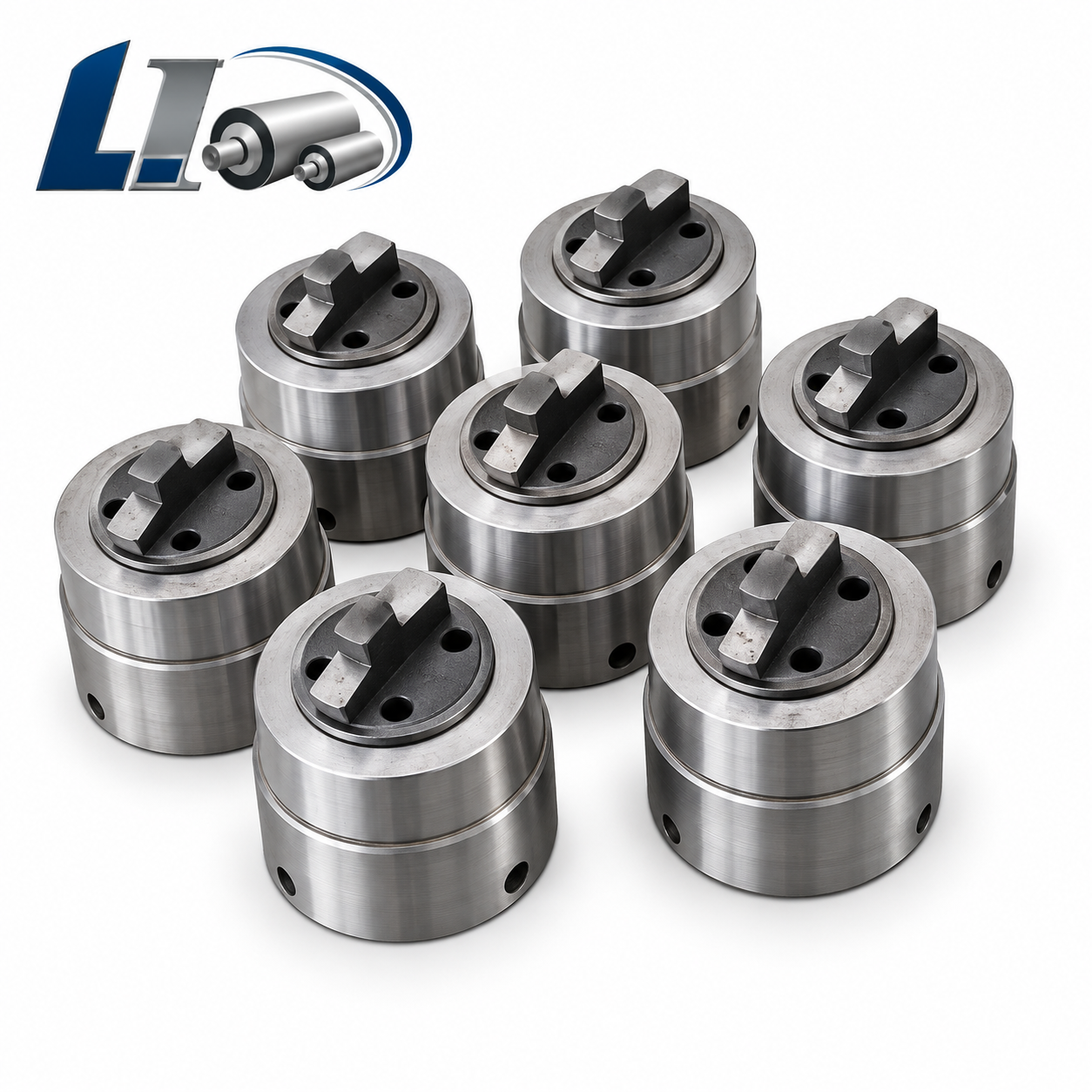
Rolling Mill Pivot: Function, Wear Signs and Replacement Guide
Rolling mill stands rely on many small mechanical parts to hold rolls and guides in the correct position. A pivot is one of these parts. Although it is not as visible as rolls or gears, a worn pivot can affect alignment, adjustment accuracy, and the stability of the stand.
What Is a Pivot in a Rolling Mill?
A pivot is a component that provides a point of rotation or support for a moving part of the stand assembly. Depending on the stand design, pivots can be used in adjustment mechanisms, roll positioning arrangements, or guide supports. They allow controlled movement while holding the part in a fixed relationship with the stand.
Why Pivots Matter
Accurate Positioning
Pivots help maintain the correct position of the parts they support. Excessive play can allow movement that changes roll or guide settings.
Stable Adjustment
When operators adjust the stand, the pivot must allow smooth movement and then hold the new position.
Load Transfer
Pivots transfer loads during rolling. They must withstand these forces without deformation.
Common Causes of Pivot Wear
- Continuous loading and movement during operation
- Insufficient lubrication
- Contamination by scale, dust, or water
- Misalignment of connected parts
- Use of material unsuitable for the load
Signs of a Worn Pivot
- Noticeable play or looseness in the supported part
- Settings that drift during operation
- Difficulty in making smooth adjustments
- Unusual noise from the stand
- Visible wear, ovality, or scoring on the pivot surface
Effects of Ignoring Pivot Wear
A worn pivot may seem minor, but it can lead to:
- Roll or guide misalignment
- Inconsistent rod dimensions
- Additional wear on connected parts
- Increased risk of unplanned stoppages
How to Choose a Replacement Pivot
1. Exact Dimensional Match
The pivot must match the original dimensions and tolerances so that it fits the stand correctly.
2. Suitable Material
The material should provide strength and wear resistance for the loads involved.
3. Surface Finish and Hardness
Proper surface finish and, where required, surface hardening improve wear life.
4. Compatibility
Confirm compatibility with the stand model and the mating parts.
Maintenance Tips
- Include pivots in regular stand inspections
- Lubricate as specified
- Protect pivots from contamination
- Check for play during roll changes
- Replace pivots and worn mating parts together where needed
- Keep spare pivots in inventory for critical stands
How to Inspect a Pivot
Pivot inspection is quick and can be included in routine stand checks. A practical approach includes:
- Moving the supported part by hand, where safe, to feel for play
- Looking for signs of wear, such as shiny or scored surfaces
- Checking that lubrication has reached the pivot
- Inspecting for corrosion or contamination
- Measuring the pivot and its bore during planned shutdowns
Small amounts of wear may be acceptable, but they should be recorded so that progression can be tracked.
Why Mating Parts Matter
A pivot works together with the bore, bush, or housing it sits in. If only the pivot is replaced while the mating part is worn, play may remain and the new pivot may wear quickly. When excessive play is found, measure both the pivot and its mating surfaces. Replacing worn bushes along with the pivot often gives a longer-lasting repair.
Material and Surface Treatment
Pivots carry loads while moving, so their surfaces must resist wear. Depending on the application, pivots are commonly made from suitable steels and may receive surface hardening to improve wear resistance while keeping a tough core. The surface finish should be smooth to reduce friction and protect mating parts.
Lubrication Practices for Pivots
Pivots are often small and easy to overlook during lubrication rounds. Missing lubrication can lead to rapid wear. Useful practices include:
- Including every pivot in the lubrication schedule
- Checking that grease fittings are not blocked
- Cleaning fittings before applying lubricant
- Using the specified lubricant
Measuring the Effect of Pivot Wear on Product Quality
Because pivots influence the position of rolls or guides, wear can show up as gradual changes in rod dimensions or more frequent adjustments by operators. If a stand needs repeated readjustment during a campaign, worn pivots and adjustment parts should be checked.
Keeping Accurate Pivot Drawings
When ordering replacement pivots, accurate dimensions are essential. Keeping drawings or measured samples on file for each stand model makes it easier to order the correct parts and ensures replacements fit first time.
Why Choose Laxmi Industries?
Laxmi Industries manufactures the Pivot for Rolling Mill and other precision components such as Couplers for Rolling Mill and Rolling Mill Stand Spare Parts.
Components are manufactured to suit the customer’s stand design and dimensional requirements.
Frequently Asked Questions
What does a pivot do in a rolling mill stand?
It provides a rotation or support point for a moving part, allowing controlled adjustment while maintaining position.
How do I know if a pivot is worn?
Look for play, drifting settings, difficult adjustment, noise, or visible wear on the pivot.
Can I replace only the pivot?
Sometimes. If mating parts are also worn, replacing them together gives better results.
Why keep spare pivots?
Having spares available reduces downtime when a worn pivot is found during inspection.
Conclusion
Pivots are small but important parts of rolling mill stands. Regular inspection, proper lubrication, and accurate replacements help keep stands aligned and adjustments reliable.
Share your stand model and pivot dimensions with Laxmi Industries to discuss suitable replacement pivots.
