

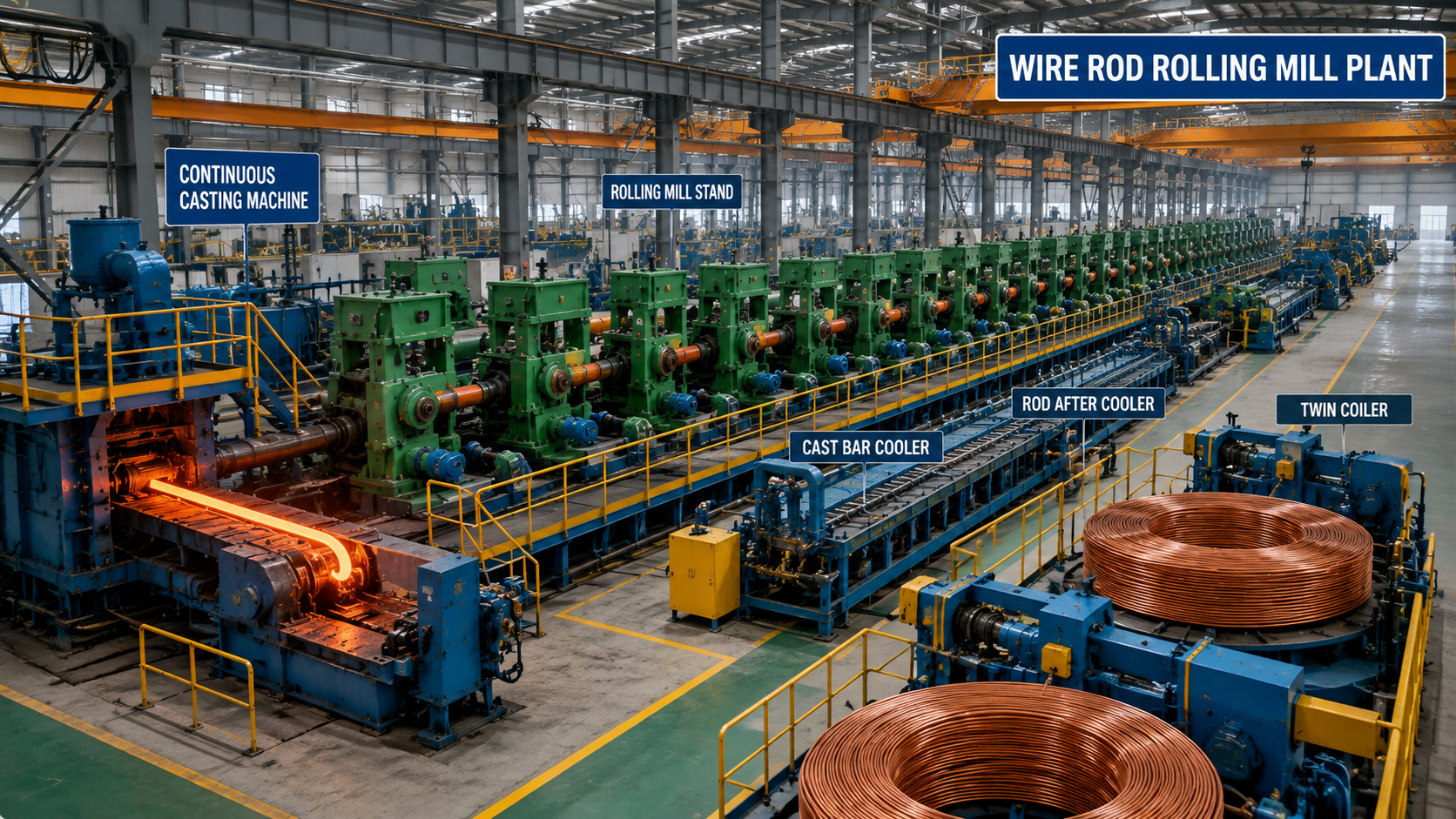
Upgrading an Old Rolling Mill: Retrofit or Replacement?
Many rolling mills keep running for decades. Over time, wear, outdated controls, and changing product requirements can reduce their performance. Manufacturers then face a key decision: retrofit the existing mill or replace it. The right choice depends on the condition of the equipment, production goals, and budget.
Signs That an Upgrade May Be Needed
- Frequent breakdowns and rising maintenance costs
- Difficulty holding rod tolerances
- Inability to reach required production speed
- Spare parts becoming hard to obtain
- Outdated controls with limited monitoring
- New product sizes or grades required
What Is a Retrofit?
A retrofit upgrades selected parts of the existing mill while keeping the main structure. Examples include:
- Replacing worn rolling mill stands
- Upgrading drives and motors
- Improving automation and controls
- Adding or replacing auxiliary equipment such as twin coilers or rod after coolers
- Replacing worn spare parts with improved components
Advantages of Retrofitting
- Lower initial cost than full replacement
- Shorter downtime in many cases
- Uses existing foundations and buildings
- Allows step-by-step improvement
Limitations of Retrofitting
- Limited by the original mill design
- Old components may still cause problems
- Integration of new and old parts can be complex
What Is Full Replacement?
Replacement means installing a new mill or complete line designed around current requirements.
Advantages of Replacement
- Designed for current capacity and products
- Modern components throughout
- Better integration of controls
- Potential for improved efficiency
Limitations of Replacement
- Higher investment
- Longer project timeline
- Possible civil works and layout changes
How to Decide
Assess the Existing Mill
Inspect structures, stands, drives, and foundations to understand their remaining life.
Define Future Requirements
Consider capacity, rod sizes, grades, and quality targets.
Compare Costs and Benefits
Include equipment cost, downtime, maintenance savings, and production gains.
Consider Phased Upgrades
A phased retrofit can spread cost and reduce disruption.
Planning the Upgrade
- Agree scope clearly with the supplier
- Plan downtime carefully
- Prepare foundations and utilities in advance
- Train staff on new equipment
- Stock spare parts for new components
Common Retrofit Projects
Many mills achieve good results by upgrading specific areas rather than the entire line. Common retrofit projects include:
- Replacing worn stands with new rolling mill stands of matching design
- Upgrading drives to variable frequency control
- Adding modern PLC and HMI controls
- Installing twin coilers to allow continuous coiling
- Improving after-cooling for better surface quality
- Upgrading bar preparation equipment for smoother mill entry
Each project should be evaluated for its effect on the complete line, not only the area being upgraded.
Assessing Your Existing Mill
A structured assessment helps decide what to upgrade. It may include:
- Visual inspection of structures and housings
- Measurements of wear on key components
- Review of maintenance records and breakdown history
- Review of product quality data
- Assessment of drives and electrical systems
The results show which areas are limiting performance and where investment will have the most effect.
Managing Downtime During an Upgrade
Upgrades often require the mill to stop. To reduce lost production:
- Prepare foundations and utilities before the shutdown
- Pre-assemble and test new equipment where possible
- Plan work in detail and assign clear responsibilities
- Have spare parts and tools ready
- Allow time for commissioning and fine-tuning
Training Staff on Upgraded Equipment
New equipment may operate differently from the old. Operators and maintenance staff should be trained before the upgraded line restarts, so they can use and maintain it correctly from the first day.
Measuring the Results
After the upgrade, compare performance with the original baseline:
- Production output
- Downtime
- Product quality
- Maintenance costs
- Energy consumption
These results confirm whether the upgrade has delivered its expected benefits and help guide future investment decisions.
Why Choose Laxmi Industries?
Laxmi Industries supplies Wire Rod Rolling Mills, Rolling Mill Stands, Continuous Casting Machines, and spare parts for both new lines and upgrades of existing equipment.
Frequently Asked Questions
Is retrofitting cheaper than replacing?
Usually the initial cost is lower, but long-term benefits should also be compared.
Can I upgrade my mill in stages?
Yes. Many mills are upgraded in phases to manage cost and downtime.
Which parts are commonly upgraded?
Stands, drives, controls, coilers, cooling, and spare parts are common upgrades.
How do I know if replacement is better?
If the structure is worn out or the design cannot meet future needs, replacement may be the better option.
Conclusion
Both retrofitting and replacement can improve rolling mill performance. A careful assessment of the existing mill and future requirements helps manufacturers choose the option that delivers the best value.
Contact Laxmi Industries with details of your existing mill and production goals to discuss upgrade options.
