

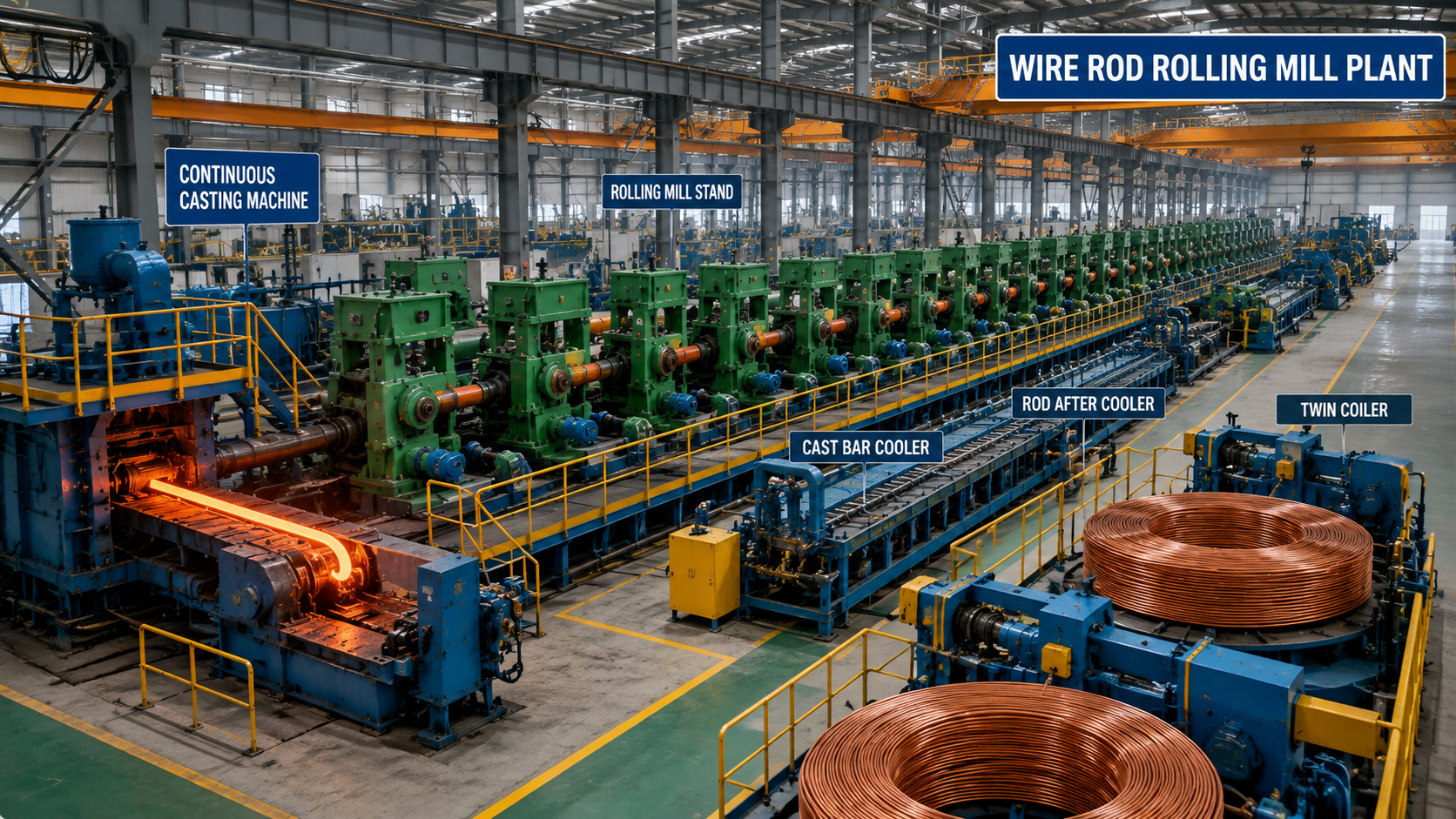
Rolling Mill Stand Design: Key Principles That Affect Performance
The rolling mill stand is where metal is actually shaped. Its design determines how accurately the material is rolled, how well the stand handles load, how easy it is to maintain, and how long its components last. Whether you are buying new stands or evaluating existing ones, understanding the main design principles helps you make better decisions.
What a Stand Must Do
A rolling mill stand must:
- Hold the rolls in precise positions
- Carry the rolling force without excessive deflection
- Allow accurate adjustment of the roll gap
- Transmit drive torque to the rolls
- Support guides that control the material
- Provide lubrication and cooling
- Allow rolls to be changed quickly and safely
Good stand design balances all of these requirements.
1. Rigidity and Stand Stiffness
When metal passes through the rolls, it pushes them apart. The housing, chocks, bearings, and adjustment mechanism all stretch or compress slightly under this force. This combined effect is often described as mill stretch or stand stiffness.
A stiffer stand keeps the roll gap more stable under changing loads, which helps produce consistent dimensions. Rigidity depends on housing design, material, cross-section, and the quality of fits between components.
2. Roll Arrangement
Two-Roll Stands
Two opposed rolls form the pass. They are widely used in bar and rod mills, often arranged in alternating horizontal and vertical positions.
Three-Roll Stands
Three rolls arranged around the pass compress the material from three directions. They are common in non-ferrous wire rod mills.
The roll arrangement affects pass design, drive arrangement, and maintenance requirements.
3. Bearing Support
Bearings must carry radial loads from rolling and, in some cases, axial loads. Bearing selection, mounting, sealing, and lubrication all influence stand reliability. The design should provide enough space for bearings of suitable capacity and allow them to be serviced.
4. Roll Gap Adjustment
Accurate adjustment is essential for correct product dimensions. Design considerations include:
- Adjustment method, such as screws, eccentrics, wedges, or hydraulics
- Resolution and repeatability of adjustment
- Locking to prevent drift during rolling
- Ease of setting during roll changes
Worn adjustment parts and pivots reduce accuracy, so the design should allow these parts to be inspected and replaced.
5. Drive Arrangement
Power can reach the rolls through individual drives, group drives, or gear trains. The stand must accommodate couplers, spindles, or gears and keep them aligned. In compact three-roll stands, internal gear trains are often used.
6. Guiding Provisions
The stand must provide secure mounting for entry and exit guides, positioned accurately relative to the roll pass. Guide holders should allow quick setting and firm locking.
7. Cooling and Lubrication
Roll cooling nozzles must be positioned to cool the rolls evenly. Lubrication passages must deliver oil or grease to bearings and gears. Seals must keep water out of bearings while allowing coolant to reach the rolls.
8. Maintainability
A well-designed stand allows:
- Quick roll changes
- Easy access to guides and nozzles
- Simple bearing replacement
- Clear lubrication points
- Safe lifting points for cranes
Designs that allow complete stands or roll assemblies to be exchanged and prepared in a workshop can reduce downtime significantly.
9. Materials and Manufacturing Accuracy
Stand performance depends on accurate machining of housings, chocks, bores, and mating faces. Materials must suit the loads involved. Heat-treated wear parts improve service life.
10. Standardisation Across the Mill
Using standard stand designs across multiple positions reduces the number of different spares and simplifies maintenance. Where possible, stands should share common bearings, seals, fasteners, and components.
Evaluating an Existing Stand Design
If you are reviewing existing stands, consider:
- Are dimensions consistent under load?
- Do settings drift during campaigns?
- How long do roll changes take?
- Which parts fail most often?
- Are spare parts easy to obtain?
The answers show whether improvements in design, materials, or maintenance are needed.
Matching Stand Design to the Product
The stand design should suit the metal, product size range, rolling speed, and production capacity. A stand designed for heavy steel sections differs from one designed for high-speed copper rod. Sharing your product requirements with the stand manufacturer helps them recommend the right design.
Why Choose Laxmi Industries?
Laxmi Industries designs and manufactures Rolling Mill Stands built around the customer’s metal, output, and plant layout, together with stand spare parts, couplers, and pivots. Every stand is inspected and tested before dispatch.
Frequently Asked Questions
What is stand stiffness?
It describes how much the stand deflects under rolling load. A stiffer stand holds the roll gap more consistently.
Are three-roll stands better than two-roll stands?
Each suits different applications. Three-roll stands are common in non-ferrous rod mills, while two-roll stands are widely used for bars and steel rod.
What makes a stand easy to maintain?
Quick roll changes, accessible guides and nozzles, simple bearing replacement, and clear lubrication points.
Why standardise stand components?
Standardisation reduces spare parts variety and simplifies maintenance.
Conclusion
Rolling mill stand design affects product accuracy, reliability, and maintenance effort. Rigidity, roll arrangement, bearing support, adjustment, drive, guiding, cooling, and maintainability all need to work together to deliver consistent production.
Contact Laxmi Industries with your product and capacity requirements to discuss the right rolling mill stand design for your mill.
