

Rolling Mill Motors and Drives: How to Select the Right Drive System
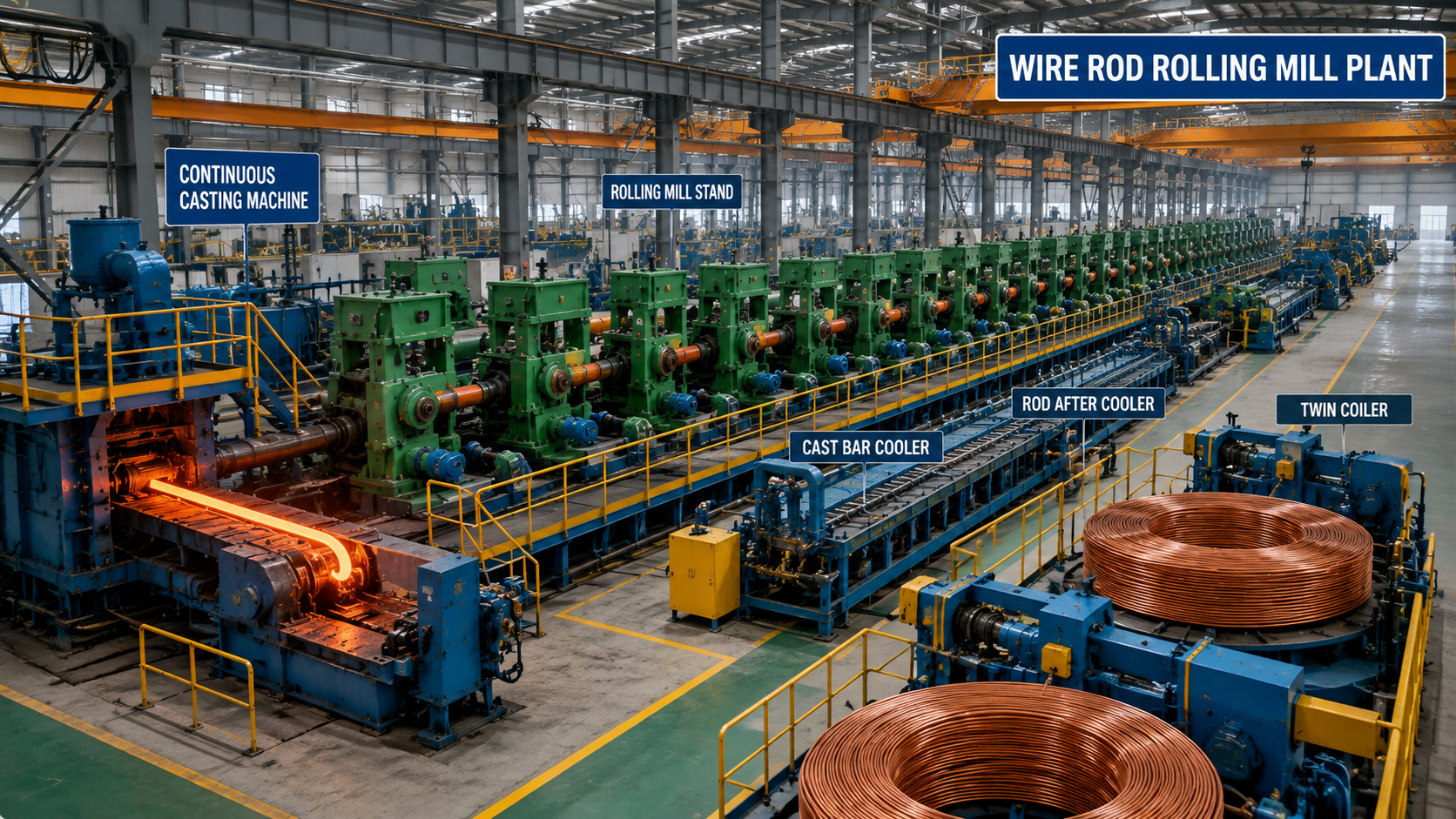
Motors and drives deliver the power that turns the rolls. They must provide enough torque, accurate speed control, and reliable operation under demanding conditions. In continuous rod mills, the drive system must also coordinate speeds between the caster, stands, and coilers.
Functions of the Drive System
- Providing torque to the rolls
- Controlling roll speed accurately
- Coordinating speeds across the line
- Handling start-up and load changes
- Protecting equipment during faults
Types of Drive Arrangements
Single Main Drive
One main motor drives several stands through a gear train. This is common in compact non-ferrous rod mills.
Individual Stand Drives
Each stand or group of stands has its own motor, allowing independent speed control.
The choice depends on mill design, product range, and control requirements.
Variable Frequency Drives (VFDs)
VFDs control AC motor speed by adjusting supply frequency. They are widely used in modern rolling mills.
Benefits
- Accurate speed control
- Smooth acceleration and deceleration
- Ability to adjust speeds for different products
- Monitoring and diagnostic functions
- Potential energy savings compared with less efficient speed control methods
Selection Factors
1. Power and Torque
Motors must deliver the required torque for the heaviest pass and largest rod size.
2. Speed Range
The drive must cover the full range of speeds required.
3. Duty Cycle
Continuous operation and frequent starts affect motor and drive sizing.
4. Environment
Heat, dust, and moisture require suitable enclosures and cooling.
5. Control Integration
Drives must communicate with the line control system for speed coordination.
6. Service and Spares
Availability of local service and spare parts is important for reliability.
Speed Coordination in Continuous Lines
In a continuous casting and rolling line, the casting machine, feeder, rolling mill, and coilers must run at coordinated speeds. Mismatches can cause tension, loops, or cobbles. The drive and control system play a central role in maintaining this balance.
Maintenance of Motors and Drives
- Keep motors clean and well ventilated
- Check bearings and lubrication
- Monitor temperatures
- Keep drive cabinets clean and cool
- Check cables and connections
- Review drive fault logs
Mechanical Connection
The motor connects to the mill through gearboxes and couplers. Correct alignment reduces vibration and wear on both motor and mill.
Starting Torque and Acceleration
When a rolling mill starts, the drive must overcome inertia and the resistance of the first pass as the bar enters. Drives must provide enough starting torque and allow controlled acceleration so that the line reaches operating speed smoothly. Abrupt starts can place shock loads on gears and couplers.
Load Changes During Threading
When the bar head enters each stand, the load on that stand’s drive increases suddenly. The drive must respond quickly to maintain speed. Good drive tuning helps keep speed stable during threading, reducing the risk of loops, tension, or cobbles.
Motor Cooling
Motors in rolling mills often work in hot, dusty environments. Overheating shortens motor life. Good practice includes:
- Keeping cooling fans and air paths clean
- Ensuring adequate ventilation in motor rooms
- Monitoring motor temperature
- Protecting motors from water spray
Drive Room Conditions
Variable frequency drives contain sensitive electronics. They should be installed in clean, cool, dry rooms or enclosures. Dust, heat, and moisture are common causes of drive faults. Filters on cabinet ventilation should be cleaned regularly, and air conditioning, where used, should be maintained.
Power Quality Considerations
Large drives can affect, and be affected by, the plant’s power supply. Voltage dips, harmonics, and supply interruptions can cause drive trips. Discussing power quality with the electrical designer and drive supplier during planning helps reduce these problems.
Spare Drive Components
Keeping critical drive spares, such as control boards, fans, and fuses, can reduce downtime after an electrical fault. Spare motors for critical positions may also be worthwhile, depending on lead times and the cost of downtime.
Training Maintenance Staff
Modern drives provide fault codes and diagnostic information. Training electrical staff to read and use this information helps them find and fix problems quickly. Keeping drive manuals and parameter records available on site is also important.
Why Choose Laxmi Industries?
Laxmi Industries manufactures Wire Rod Rolling Mills, Rolling Mill Stands, and Couplers, with machines built around the customer’s metal, output, and plant layout.
Frequently Asked Questions
What is a VFD in a rolling mill?
A variable frequency drive that controls motor speed by adjusting supply frequency.
Why is speed coordination important?
Mismatched speeds can cause tension, loops, and cobbles in continuous lines.
How do I size a rolling mill motor?
Based on required torque, speed range, and duty cycle for the product range.
What maintenance do drives need?
Cleaning, cooling, connection checks, and monitoring of temperatures and faults.
Conclusion
The drive system powers and coordinates the entire rolling mill. Correct sizing, accurate speed control, good integration, and regular maintenance help ensure reliable production and consistent rod quality.
Contact Laxmi Industries to discuss rolling mill equipment and drive line components for your line.
