

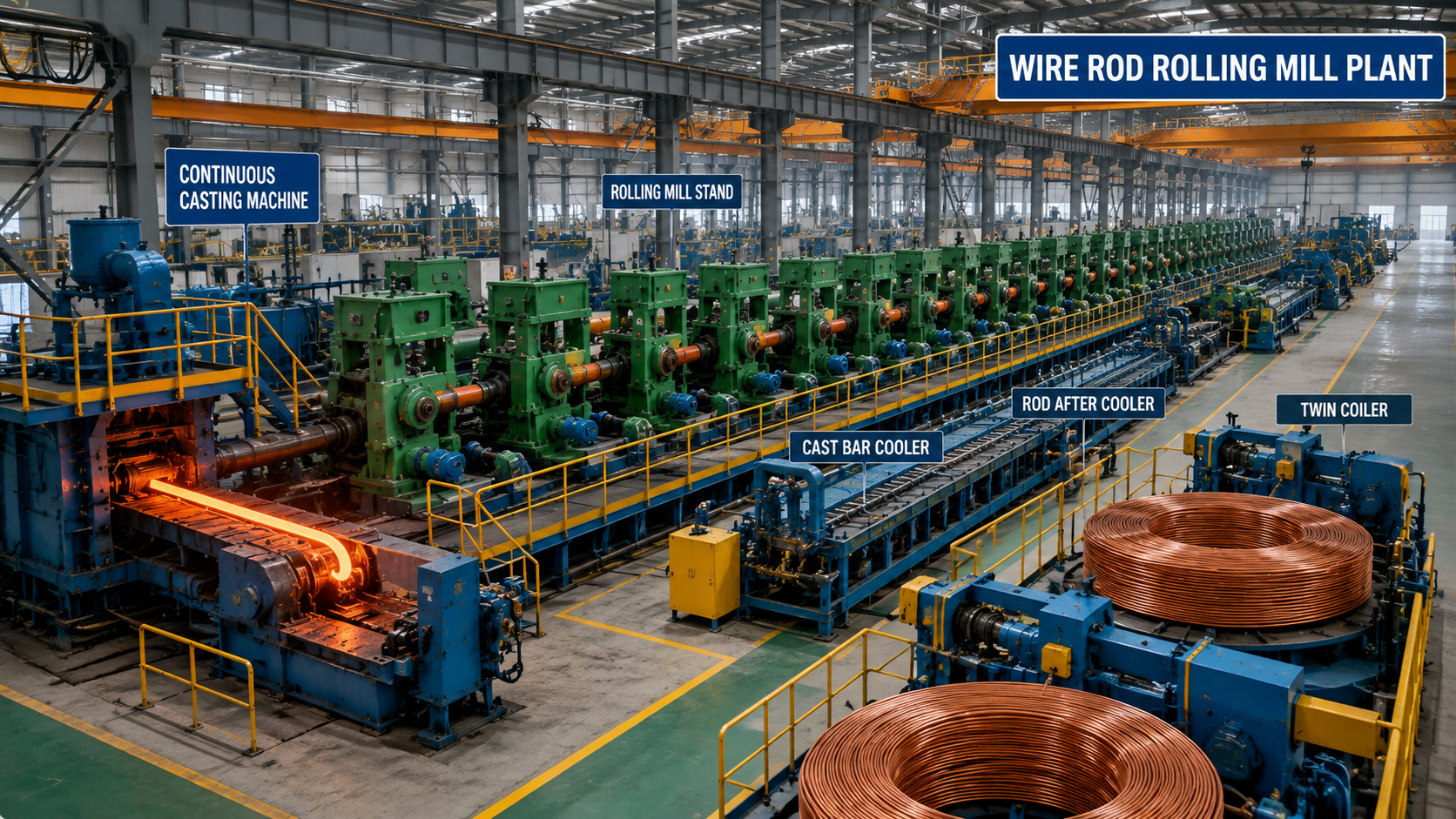
Controlled Cooling of Steel Wire Rod: Water Boxes, Laying and Air Cooling
In steel wire rod production, the way the rod cools after rolling has a strong effect on its properties. Cooling influences the internal structure of the steel, the amount of surface scale, and how the rod behaves during later drawing. For this reason, many steel wire rod mills use controlled cooling systems rather than letting the rod cool naturally.
Why Controlled Cooling Matters
- Influences microstructure and mechanical properties
- Controls the amount and type of surface scale
- Supports consistent properties along the coil
- Affects drawability for customers
- Allows different grades to be produced with suitable properties
Main Stages of Controlled Cooling
1. Water Cooling After the Finishing Section
After leaving the finishing stands, the rod often passes through water cooling boxes or nozzles. These reduce the rod temperature to the desired level before it is laid into rings.
2. Equalisation
After water cooling, the rod surface and core temperatures equalise as heat flows from the core to the surface.
3. Laying
A laying head forms the rod into continuous rings that are spread onto a conveyor.
4. Air Cooling on the Conveyor
The rings travel along a cooling conveyor, where fans and covers control the cooling rate. Faster cooling or slower cooling can be selected depending on the grade.
5. Coil Formation
At the end of the conveyor, rings are collected into coils.
Water Cooling Boxes
Water boxes use nozzles to spray water around the rod as it passes through. Key design factors include:
- Water pressure and flow
- Nozzle design and spacing
- Length of the cooling zone
- Water stripping to remove water after cooling
Cooling must be even around the rod to avoid uneven properties.
Air Cooling Conveyors
On the conveyor, the cooling rate is adjusted by:
- Fan speed and number of fans in use
- Conveyor speed, which changes ring spacing
- Covers or hoods that slow cooling where needed
Different grades may require different settings, such as faster cooling for some higher-carbon grades or slower cooling for softer products.
Effect on Scale
The amount of scale formed depends on temperature and time in air. Lower laying temperatures and controlled cooling can reduce scale, which improves yield and makes descaling easier for customers.
Effect on Properties
Cooling rate influences how steel transforms as it cools. This affects strength, ductility, and consistency. Controlled cooling allows mills to target properties suited to the customer’s application.
Maintaining Cooling Systems
- Inspect and clean nozzles regularly
- Monitor water pressure, flow, and temperature
- Maintain water quality to avoid scale and blockages
- Check water stripping devices
- Maintain fans, conveyors, and covers
- Calibrate temperature measurement equipment
Common Problems
- Uneven cooling due to blocked nozzles
- Water carry-over onto the laying head
- Temperature variation between coils
- Ring overlapping causing uneven cooling on the conveyor
- Fan failures
Non-Ferrous Comparison
Copper and aluminium rod lines also cool rod after rolling, but mainly for surface quality, oxide control, and handling. Equipment such as a Rod After Cooler is designed for these needs.
Setting Cooling Parameters for a New Grade
When introducing a new grade, a structured approach helps reach good results quickly:
- Start from settings used for a similar grade
- Define target laying temperature
- Set water box flow to reach that temperature
- Choose initial conveyor speed and fan settings
- Test samples from the start, middle, and end of coils
- Adjust settings based on property results
- Record final settings for repeat orders
Checking Property Consistency Within a Coil
Rings at the edges of the conveyor and rings in the centre can cool at different rates because of overlapping. This may cause property variation within a coil. Many mills test samples from different positions to confirm consistency and adjust fan distribution or ring pattern if needed.
Temperature Measurement
Reliable temperature measurement is essential for controlled cooling. Pyrometers should be:
- Positioned where they see the rod clearly
- Protected from water and steam
- Cleaned regularly
- Checked against a reference periodically
Linking Cooling to Customer Feedback
Customers drawing or heat treating the rod often notice property changes before the rod mill does. Their feedback on breaks, drawability, or strength can point to cooling changes and should be reviewed alongside cooling records.
Why Choose Laxmi Industries?
Laxmi Industries manufactures rolling mill machinery and spare parts for the steel, copper, and aluminium industries, including Wire Rod Rolling Mills, Rolling Mill Stands, Rod After Coolers, and Twin Coilers.
Frequently Asked Questions
What is controlled cooling of wire rod?
It is a process that controls how fast steel rod cools after rolling to achieve desired properties and scale levels.
What does a water cooling box do?
It sprays water around the rod to reduce its temperature before laying.
Why are fans used on cooling conveyors?
Fans control the cooling rate of the rod rings.
Does cooling affect scale?
Yes. Temperature and exposure time influence how much scale forms.
Conclusion
Controlled cooling is an essential part of steel wire rod production. Water cooling, laying, and air cooling work together to deliver rod with suitable properties and manageable scale. Well-maintained cooling equipment helps produce consistent coils for demanding customers.
Contact Laxmi Industries to discuss wire rod mill equipment and cooling solutions for your plant.
