

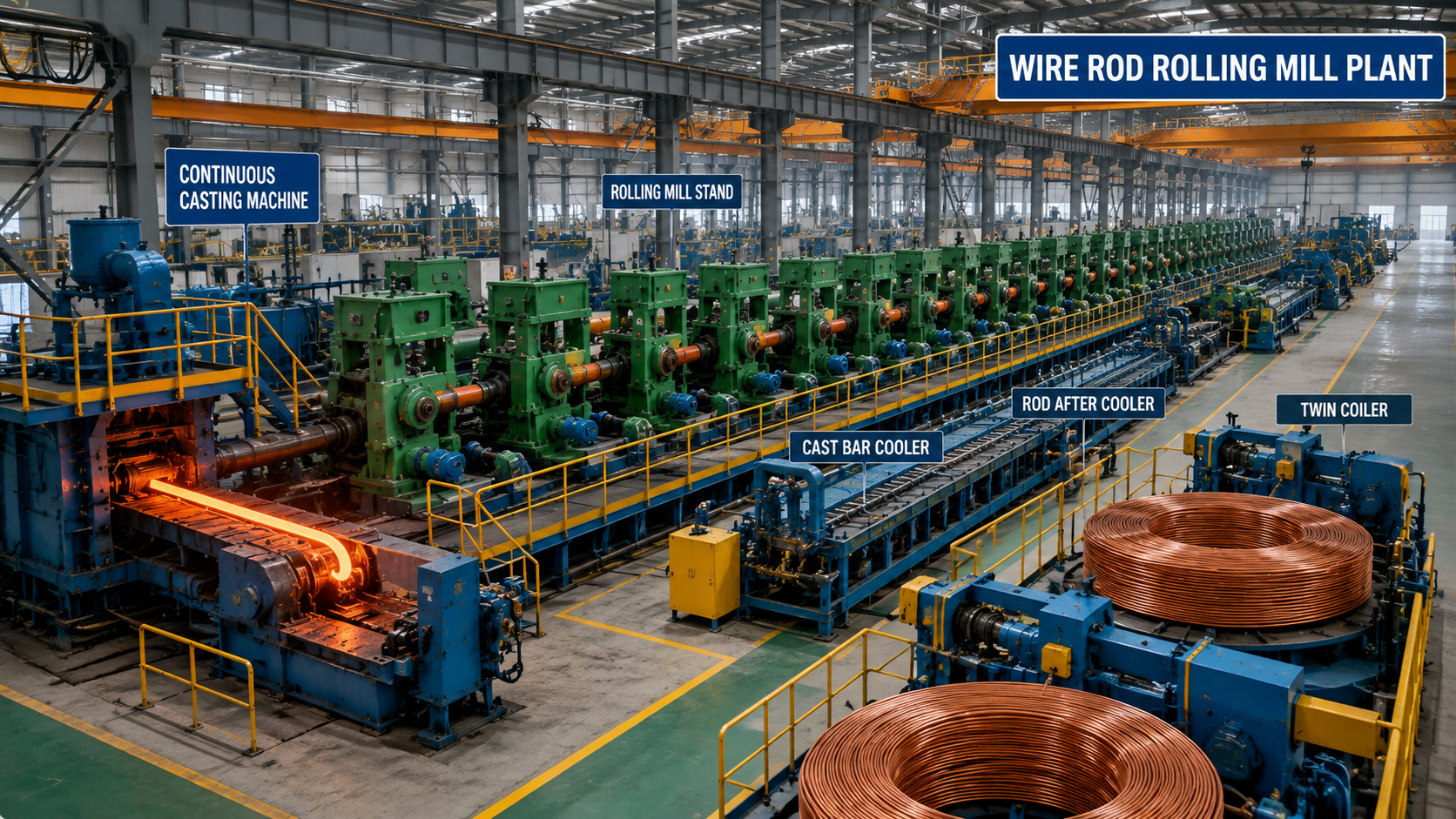
How to Reduce Operating Cost per Tonne in a Wire Rod Mill
Margins in wire rod production are often tight. Raw material prices are largely set by the market, so the costs a mill can control, such as energy, yield, spare parts, labour, and downtime, make a real difference to profitability. Measuring cost per tonne and working steadily on its main drivers is one of the most effective ways to improve results.
Why Measure Cost per Tonne?
Total monthly costs rise and fall with production. Cost per tonne shows how efficiently each tonne of good rod is produced. It allows fair comparison between months, shifts, and products, and highlights where improvement efforts should focus.
Main Cost Drivers in a Wire Rod Mill
- Metal loss and yield
- Energy for melting or heating, rolling, and utilities
- Rolls, guides, and wear parts
- Other spare parts and repairs
- Lubricants, coolants, and consumables
- Labour
- Downtime and lost production
1. Improve Yield
Every tonne of metal that becomes scrap must be remelted or sold at a lower value. Yield losses come from:
- Start-up scrap
- Crop ends
- Cobbles
- Off-size or defective coils
- Metal losses in melting and casting
Reducing restarts, improving bar quality, and preventing cobbles all improve yield.
2. Reduce Energy per Tonne
Energy is usually one of the largest controllable costs. Ways to reduce it include:
- Keeping furnaces well insulated and correctly adjusted
- Matching melting rate to casting demand
- Maintaining drives, gearboxes, and bearings to reduce friction
- Running pumps and fans at the required duty only
- Fixing compressed air leaks
- Reducing idle running during stoppages
3. Extend Roll and Guide Life
Rolls and guides are major consumables. Their cost per tonne can be reduced by:
- Planned regrinding before excessive wear
- Even roll cooling
- Clean coolant
- Correct alignment and guide setting
- Tracking tonnage per roll and per guide
4. Control Spare Parts Costs
- Use reliable suppliers to avoid repeat failures
- Consider qualified compatible parts for high-consumption items
- Keep the right stock levels to avoid emergency purchases
- Investigate repeat failures and fix root causes
5. Reduce Downtime
Downtime costs more than lost output. Fixed costs continue, and restarts consume energy and create scrap. Preventive maintenance, condition monitoring, faster roll changes, and critical spares all reduce downtime.
6. Optimise Lubricants and Consumables
Using the right lubricant and keeping it clean extends component life and reduces consumption. Monitoring coolant condition reduces replacement frequency.
7. Improve Labour Productivity
Well-trained teams work more efficiently. Clear procedures, good tools, and organised workshops help maintenance and production staff do more with the same resources.
8. Reduce Quality Costs
Rejected coils, rework, and customer complaints all add cost. Consistent process control and quality testing reduce these losses.
Building a Cost Reduction Programme
Step 1: Measure
Collect accurate data on costs, production, energy, yield, and downtime.
Step 2: Prioritise
Identify the largest cost drivers and the easiest improvements.
Step 3: Act
Assign responsibilities and timelines for each improvement.
Step 4: Track
Measure results regularly and report cost per tonne monthly.
Step 5: Sustain
Make successful changes part of standard procedures.
When Investment Makes Sense
Some cost reductions require investment, such as new drives, improved cooling, or replacement of worn equipment. Calculate the expected saving per tonne and the payback period to decide which investments are worthwhile.
Common Pitfalls
- Cutting maintenance to save money in the short term
- Buying the cheapest parts without considering life
- Focusing only on one cost driver
- Not measuring results
A Sample Monthly Cost Review
A simple monthly review can keep cost reduction on track. Many mills use a short table covering:
- Tonnes produced
- Yield percentage
- Energy per tonne
- Roll and guide cost per tonne
- Spare parts cost per tonne
- Downtime hours by main cause
- Number of cobbles
Comparing each figure with the previous month and the target shows where performance is improving and where action is needed.
Involving Every Department
Cost per tonne is influenced by production, maintenance, quality, purchasing, and stores. A short monthly meeting with representatives from each area helps:
- Share results openly
- Agree on the top two or three actions
- Assign clear owners
- Review progress at the next meeting
When every department sees how its work affects cost, improvement becomes a shared goal.
Quick Wins Many Mills Find
- Switching off pumps and fans during long stops
- Repairing compressed air leaks
- Reducing crop lengths that are longer than necessary
- Standardising roll change procedures to cut downtime
- Improving lubrication routes to prevent bearing failures
These changes often need little or no investment but produce visible savings within weeks.
Why Choose Laxmi Industries?
Laxmi Industries supplies Wire Rod Rolling Mills, Rolling Mill Stands, rolls, guides, and spare parts designed for reliable, efficient production, helping customers reduce operating costs over the life of their equipment.
Frequently Asked Questions
What is the biggest cost in a wire rod mill?
Apart from raw material, energy, yield losses, wear parts, and downtime are usually major costs.
How can yield be improved?
By reducing start-up scrap, crop losses, cobbles, and defective coils.
Does cheaper spare parts always reduce cost?
Not always. Parts that wear faster or fail early can increase total cost.
How often should cost per tonne be reviewed?
Monthly reviews are common, with key indicators tracked more frequently.
Conclusion
Reducing operating cost per tonne requires attention to yield, energy, wear parts, downtime, and quality. Measuring costs accurately and improving the largest drivers step by step helps wire rod mills stay competitive.
Contact Laxmi Industries to discuss equipment and spare parts that support lower operating costs in your mill.
