

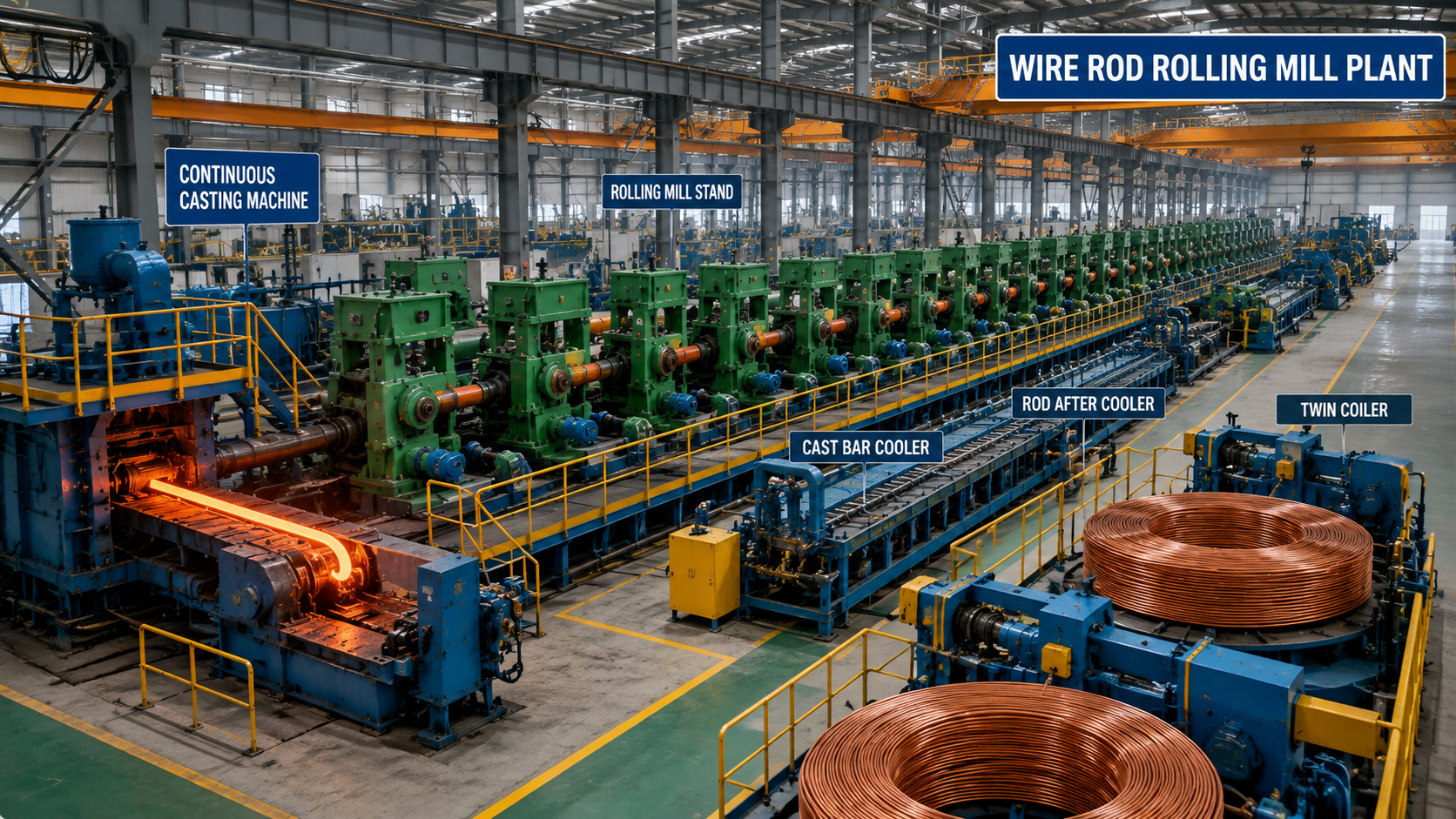
Copper Melting Furnace Options for Continuous Rod Lines
The melting furnace is the starting point of a copper rod line. It must supply molten copper at the right temperature, quality, and rate to keep the casting machine running continuously. Choosing the right furnace type has a long-term effect on energy use, metal quality, and production stability.
Role of the Melting Furnace
- Melting input copper such as cathodes or other approved material
- Supplying molten metal at a steady rate
- Supporting control of metal temperature and quality
- Feeding the holding and casting system
Common Furnace Types
Shaft Furnaces
Shaft furnaces are widely used for melting copper cathodes in continuous rod production. Copper is charged at the top of a vertical shaft and melted by burners near the bottom. Molten metal flows out continuously.
Key points:
- Continuous melting suited to large-capacity lines
- Combustion conditions influence metal quality
- Requires suitable input material
Induction Furnaces
Induction furnaces melt copper using electromagnetic induction. They are used in many smaller and medium-capacity operations.
Key points:
- Electrical heating
- Good temperature control
- Batch or semi-continuous operation, depending on setup
Holding Furnaces
Holding furnaces maintain molten metal at a steady temperature between melting and casting, helping buffer variations in supply.
Factors for Choosing a Furnace
1. Required Capacity
The furnace must supply enough metal for the casting machine at full output.
2. Input Material
The type and quality of copper input influences furnace selection.
3. Energy Availability and Cost
Fuel and electricity availability and cost affect the choice.
4. Metal Quality Requirements
Furnace type and operation influence metal quality and oxygen control.
5. Space and Layout
Furnaces must fit the plant layout, with safe metal transfer to the caster.
6. Environmental Requirements
Emissions control and local regulations should be considered.
Linking the Furnace to the Caster
Metal transfer between the furnace and the Continuous Casting Machine must be smooth and controlled. Launders, holding furnaces, and pouring systems should maintain temperature and protect the metal.
Energy Efficiency Considerations
- Good insulation and refractory condition
- Burner maintenance and combustion control
- Reduced heat losses during transfer
- Matching furnace output to casting demand
Matching Furnace Output to Casting Demand
In a continuous line, the casting machine needs a steady supply of molten metal. If the furnace produces too little, casting must slow down or stop. If it produces too much, metal must be held for longer, using extra energy. Matching furnace output to casting demand is therefore important for both production and energy efficiency.
Refractory Care
The refractory lining protects the furnace structure and holds heat. Damaged refractories increase heat losses and can lead to metal contamination or safety risks. Good refractory care includes:
- Regular inspection of linings
- Prompt repair of damaged areas
- Controlled heating and cooling during start-up and shutdown
- Keeping records of lining life and repairs
Burner and Combustion Maintenance
For fuel-fired furnaces, burner condition affects efficiency and metal quality. Burners should be cleaned and adjusted regularly, and combustion conditions checked. Poorly adjusted burners waste fuel and can affect metal chemistry.
Launders and Metal Transfer
Launders carry molten copper from the furnace to the holding furnace or caster. They should be designed to minimise heat loss and exposure to air. Covers, preheating, and good maintenance help keep metal temperature and quality stable during transfer.
Charge Material Handling
The quality and condition of the charge material influence furnace performance. Clean, dry material reduces the risk of contamination and safety problems. Charge material should be stored in a dry area and inspected before use.
Safety Around Melting Furnaces
Molten copper presents serious hazards. Key safety practices include:
- Never introducing wet material into molten metal
- Using suitable protective equipment
- Keeping the furnace area clear and dry
- Following emergency procedures for metal spills
Planning Furnace Capacity for the Future
When planning a new line, consider whether the furnace should have extra capacity for future growth. Expanding melting capacity later can be more difficult than including some margin at the start.
Why Choose Laxmi Industries?
Laxmi Industries manufactures Continuous Casting Machines, Wire Rod Rolling Mills, and downstream equipment for copper rod lines, and works with customers to integrate casting and rolling with their melting arrangements.
Frequently Asked Questions
Which furnace is best for copper rod production?
It depends on capacity, input material, energy costs, and quality requirements.
Why are shaft furnaces common in large lines?
They provide continuous melting suited to continuous casting.
What is a holding furnace for?
It keeps molten metal at a steady temperature and helps buffer supply to the caster.
Does the furnace affect rod quality?
Yes. Furnace conditions influence metal temperature, cleanliness, and oxygen content.
Conclusion
The melting furnace sets the conditions for the entire copper rod line. Selecting a furnace that matches capacity, input material, energy, and quality needs, and integrating it well with the caster, supports stable and efficient production.
Contact Laxmi Industries to discuss continuous casting and rolling equipment for your copper rod line.
