

Three-Roll vs Two-Roll Rolling Stands: Which Suits Your Rod Mill?
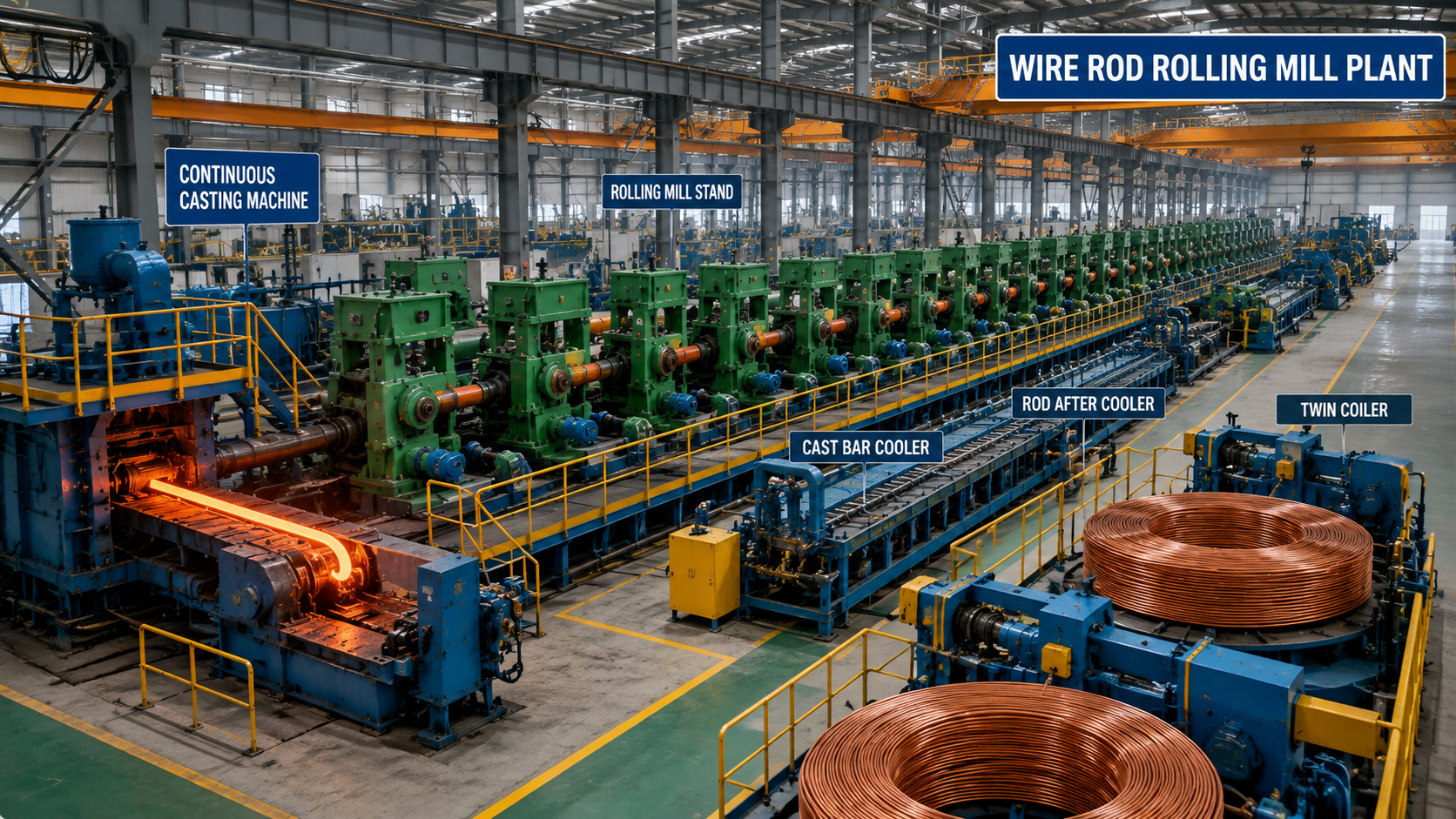
The stand is where the metal is actually reduced, and the number and arrangement of rolls in each stand affects how the material is shaped. Two-roll and three-roll stands are both widely used in rod rolling. Understanding their differences helps manufacturers choose the right configuration for their metal and product.
Two-Roll Stands
A two-roll stand has two rolls, one above the other or side by side, with grooves forming the pass between them. Successive stands are often arranged so the material is acted on from different directions, for example in oval-round sequences.
Characteristics
- Simple, widely understood design
- Common in steel rod and bar mills
- Pass sequences often require rotating the material between stands, or alternating horizontal and vertical stands
- Flexible for many product sizes
Three-Roll Stands
A three-roll stand has three rolls arranged around the pass, usually spaced evenly. The rolls form a triangular or round pass, acting on the material from three directions at once.
Characteristics
- Material is compressed from three sides
- Commonly used in non-ferrous wire rod mills, especially for copper and aluminium
- Successive stands are often arranged in alternating orientations
- Compact stand design
How the Choice Affects Rolling
Material Flow
Three-roll stands distribute deformation more evenly around the section, which suits many non-ferrous applications.
Pass Design
Two-roll mills commonly use box, oval, and round passes. Three-roll mills commonly use triangular and round passes.
Mill Layout
Three-roll stands are often mounted in a compact, close-coupled arrangement driven through gear trains.
Maintenance
Each design has its own maintenance needs. Three-roll stands have more rolls per stand, while two-roll mills may have more stands or more complex material handling between stands.
Selection Factors
- Metal type
- Cast bar or billet size
- Final rod size range
- Required production speed
- Available space
- Maintenance capabilities
Spare Parts Considerations
Each stand type uses specific rolls, bearings, gears, and guides. Spares should match the stand design exactly. Standardising stand designs across a mill can simplify spare parts management.
How Three-Roll Stands Are Typically Driven
In many non-ferrous rod mills, three-roll stands are mounted in a line and driven from a common drive through gear trains. Each stand receives power through bevel gears and shafts that turn all three rolls. Successive stands are often rotated relative to each other so that each pass acts on the material from a different angle. This arrangement helps produce a well-formed round rod.
Setting Three-Roll Stands
Because three rolls form the pass, setting a three-roll stand requires care to ensure all rolls are positioned symmetrically. Uneven roll positions can lead to shape errors or uneven wear. Many mills prepare and set three-roll stands in a workshop before installing them in the mill, which improves accuracy and shortens downtime.
Roll Changes in Three-Roll Mills
In some three-roll mill designs, complete stands can be removed and replaced with pre-set spare stands. This approach allows roll changes to be carried out quickly, with the detailed roll work done in the workshop. Having spare stands available supports high mill availability.
Two-Roll Stands in Modern Mills
Two-roll stands remain widely used, especially in steel bar and rod mills. Modern designs may use housingless or cantilever arrangements to simplify roll changes and improve rigidity. Alternating horizontal and vertical stands can eliminate the need to twist the material between passes.
Comparing Maintenance Requirements
- Three-roll stands have more rolls and bearings per stand but often fewer stands are needed for a given reduction
- Two-roll mills may have more stands or more complex handling between stands
- Both require accurate setting, good lubrication, and regular inspection
Product Quality Considerations
Both stand types can produce high-quality rod when designed and maintained correctly. The choice should be based on the metal, product range, required output, and the experience of the operating team, rather than on stand type alone.
Questions to Discuss with Your Supplier
- Which stand type is recommended for your metal and rod sizes?
- How are stands changed and set?
- What spare stands or parts are recommended?
- How does the stand design affect energy use and maintenance?
Why Choose Laxmi Industries?
Laxmi Industries manufactures Rolling Mill Stands and Wire Rod Rolling Mills for non-ferrous rod production, as well as stand spare parts, copper mill rolls, and China rolling mill rolls.
Frequently Asked Questions
What is a three-roll stand?
A stand with three rolls arranged around the pass, compressing the material from three directions.
Why are three-roll stands used for copper and aluminium rod?
They distribute deformation evenly and suit continuous non-ferrous rod rolling.
Are two-roll stands still used?
Yes. They are widely used, particularly in steel rod and bar mills.
Can I mix stand types in one mill?
Some mills combine different stand types, depending on design. This should be evaluated by the equipment supplier.
Conclusion
Both two-roll and three-roll stands have proven roles in rod rolling. The right choice depends on the metal, product range, and mill design. For non-ferrous wire rod, three-roll stands are a common and effective solution.
Contact Laxmi Industries to discuss the right rolling mill stand configuration for your product range.
