

In-Line Surface Cleaning and Pickling of Copper Rod: A Practical Overview
Hot copper leaving a rolling mill forms surface oxides when exposed to air. If these oxides remain on the rod, they can affect wire drawing and the appearance of the finished product. Many copper rod lines include an in-line cleaning or pickling stage to reduce oxides before coiling.
Why Oxide Removal Matters
- Supports smoother wire drawing
- Reduces die wear at the customer’s plant
- Improves rod appearance
- Helps meet customer surface requirements
Where Cleaning Takes Place
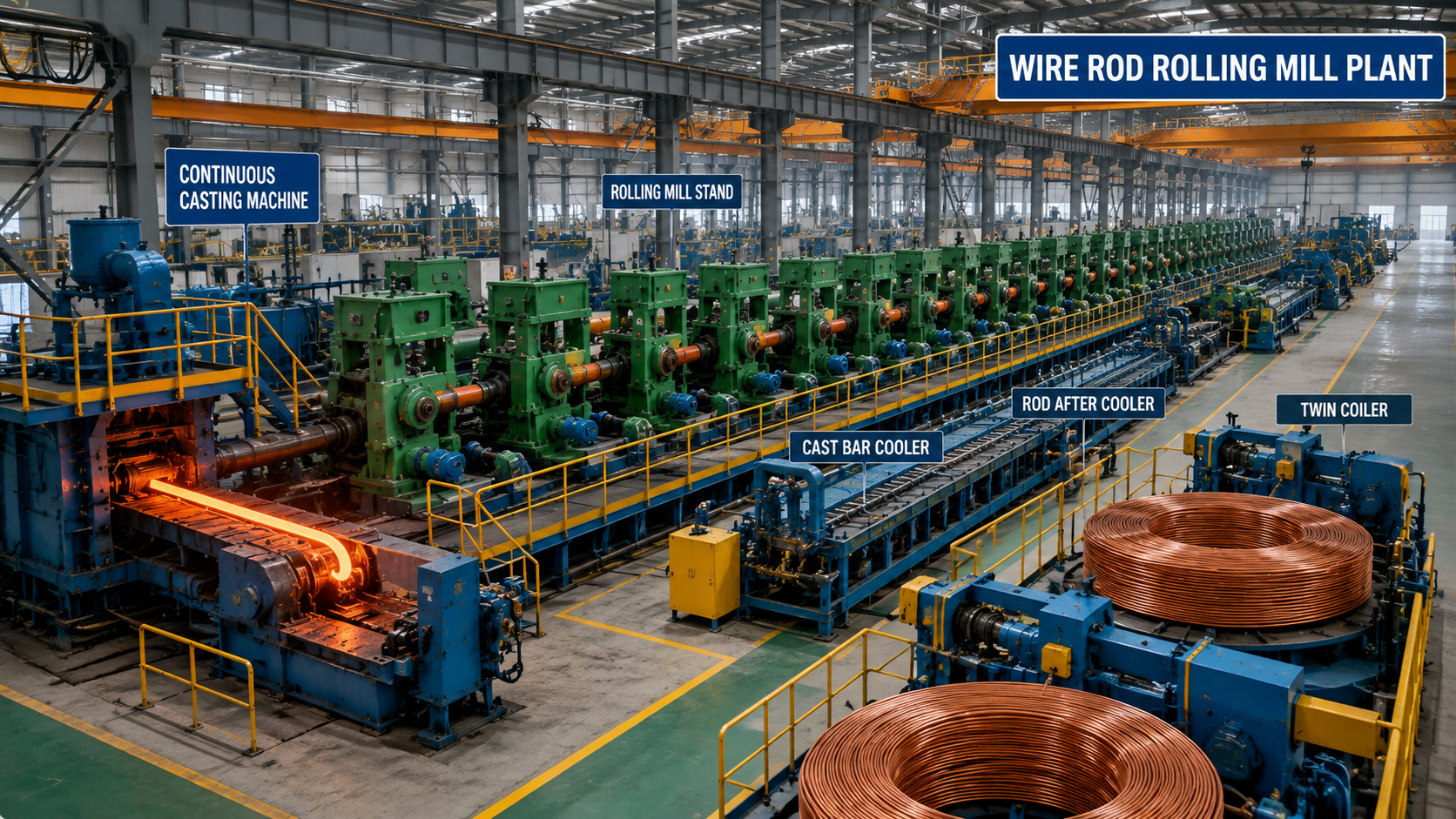
In continuous copper rod lines, surface treatment is often carried out in the cooling section after the rolling mill. The rod passes through tubes where a cleaning solution is circulated, combining cooling and oxide reduction. The rod is then rinsed or dried and coiled.
Main Elements of an In-Line Cleaning System
- Cooling and treatment tubes
- Solution tanks
- Circulation pumps
- Filtration
- Concentration control
- Rinsing and drying
- Fume extraction, where required
Factors Affecting Cleaning Performance
Solution Concentration
The cleaning solution must be kept within the specified concentration range.
Contact Time
Line speed and treatment length determine how long the rod is exposed to the solution.
Temperature
Rod and solution temperatures affect the cleaning reaction and cooling.
Solution Cleanliness
Contaminated solution reduces effectiveness and may mark the rod.
Drying
Moisture left on the rod can lead to staining in the coil.
Maintenance Practices
- Check and adjust solution concentration regularly
- Clean or replace filters
- Inspect tubes for deposits and wear
- Check pumps and pipework for leaks
- Verify drying equipment performance
- Maintain fume extraction systems
Safety and Environmental Points
- Handle chemicals according to safety data sheets
- Provide protective equipment for operators
- Ensure good ventilation
- Store chemicals safely
- Dispose of used solution according to regulations
Signs of Cleaning Problems
- Dark or patchy rod surface
- Stains appearing in coils
- Residue on the rod
- Increased complaints from wire drawing customers
How Cleaning Fits with After-Cooling
The cleaning and cooling functions are often combined in the Rod After Cooler. Its design and condition therefore affect both temperature control and surface quality.
Monitoring Solution Condition
The condition of the cleaning solution changes as it is used. Dissolved copper, contaminants, and changes in concentration all affect performance. A simple monitoring routine includes:
- Measuring concentration at regular intervals
- Checking solution temperature
- Observing solution colour and clarity
- Recording additions and adjustments
- Planning solution replacement or regeneration when required
Filtration and Sludge Removal
Particles and sludge can build up in the cleaning system over time. If not removed, they can block nozzles, reduce flow, and mark the rod surface. Regular filter changes and periodic tank cleaning help maintain consistent performance.
Rinsing Practices
Where the process includes rinsing after cleaning, the rinse water should be kept clean enough to remove residue from the rod. Contaminated rinse water can leave deposits that later appear as stains. Monitoring rinse water quality and replacing it when needed helps protect the rod surface.
Drying and Its Effect on Coil Appearance
Effective drying is one of the most important steps for coil appearance. Moisture trapped between turns of rod in a coil can cause stains or discolouration that develop during storage. Air wipes or other drying methods should be checked regularly, and their position confirmed after maintenance.
Inspecting Rod Surface After Cleaning
Operators should inspect the rod surface regularly at the coiler. A uniform, clean surface indicates good cleaning and drying. Patchy colour, dark areas, or residue suggest that solution concentration, contact time, rinsing, or drying needs attention.
Integrating Cleaning with Line Speed Changes
When line speed changes, contact time with the solution also changes. Faster speeds reduce contact time, which may reduce cleaning effectiveness. If speeds are increased, cleaning conditions should be reviewed to maintain surface quality.
Documentation and Training
Written procedures for solution handling, monitoring, and system maintenance help maintain safe and consistent operation. Operators should be trained on both process requirements and chemical safety.
Why Choose Laxmi Industries?
Laxmi Industries manufactures Rod After Coolers, Twin Coilers, and Wire Rod Rolling Mills for copper rod production, configured according to rod size, line speed, and surface requirements.
Frequently Asked Questions
Why is copper rod pickled?
To reduce surface oxides formed during hot rolling, supporting drawing performance and appearance.
Is pickling done separately?
In many continuous lines, it is done in-line in the cooling section after rolling.
What causes stains in copper coils?
Moisture left on the rod or residue from the cleaning solution can cause staining.
How is solution strength controlled?
By regular measurement and adjustment of concentration.
Conclusion
In-line surface cleaning helps copper rod leave the line with a clean surface ready for drawing. Maintaining solution condition, contact time, and drying ensures consistent results.
Contact Laxmi Industries to discuss rod after cooling and surface treatment equipment for your copper rod line.
